2026-05-29
Skin Tags Near the Ear: Accessory Tragus Removal Surgery
Learn about the removal of skin tags (accessory tragus) near the ear, including surgical procedures for adults and children, recovery, and results.
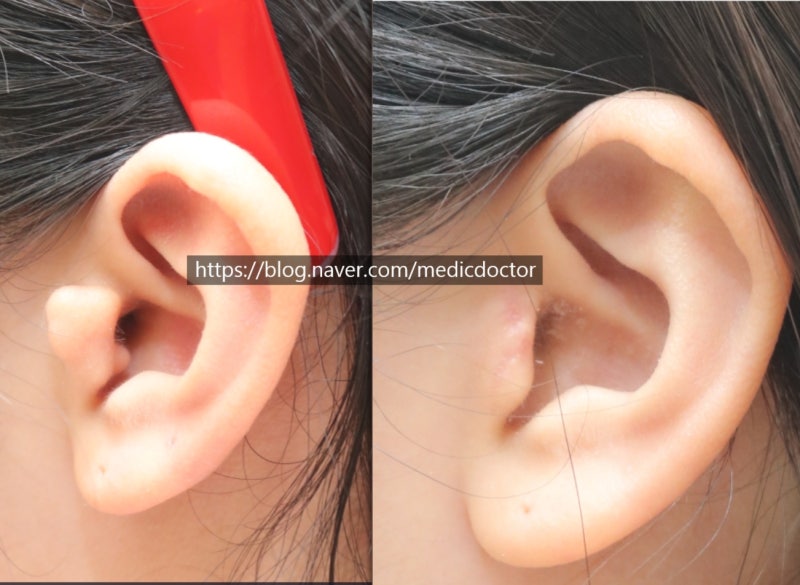
Surgery for skin tags near and in front of the ear (Accessory Tragus)
To explain what this is, a picture is worth a thousand words. Let me show you a photo.
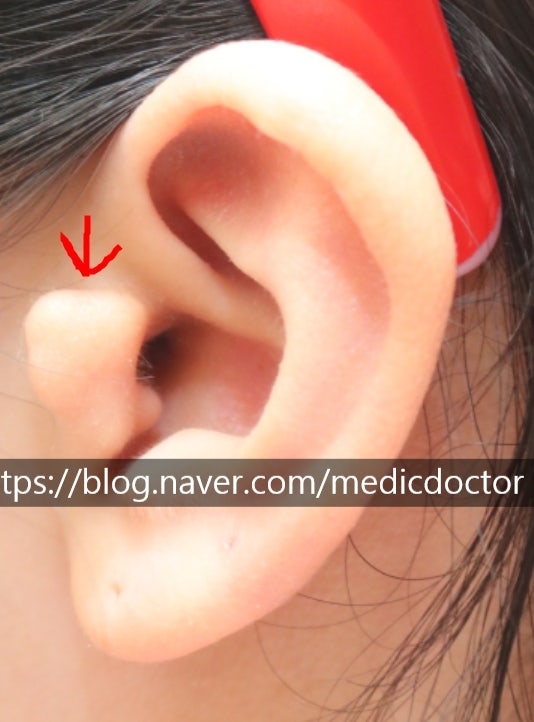
It is the growth indicated by the arrow. Usually, it refers to a small ‘club-like’ or ‘nipple-sized’ protrusion in front of the ear.
In English, these are often called skin tags, but medically they are known as an accessory tragus.
For adults, these can be easily and cleanly removed under local anesthesia.
However, for infants and young children, the situation is a bit different.
Since young children often cannot stay still, it is generally best to wait until they are in elementary school. However, these days, there is a tendency to perform the surgery earlier because children may be teased by their peers.
Because very young children require sedation or general anesthesia, it is usually recommended to wait until at least the first grade of elementary school, when they are old enough to tolerate a local anesthetic injection.
The surgery is typically performed for cosmetic purposes. It often involves removing a portion of the underlying cartilage, as these tags frequently contain a cartilaginous core.
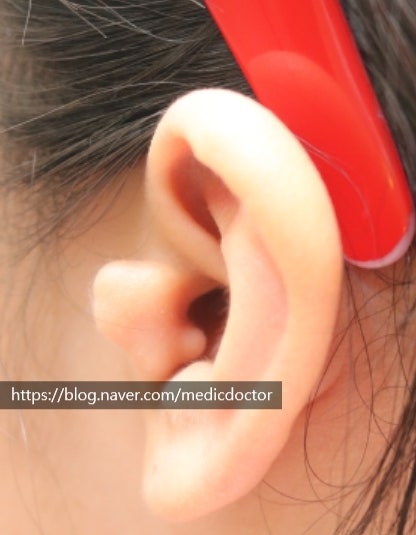
In some cases, there may be a small protrusion behind the ear as well.
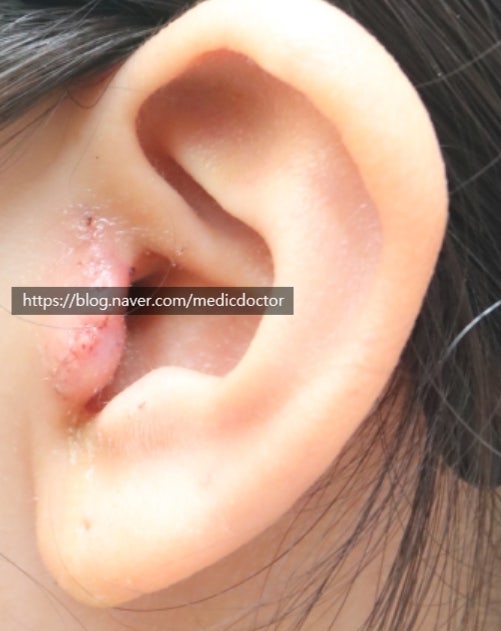
This is the appearance one week after removal, following the removal of the stitches. The cartilage was properly excised, and the excess skin was cleanly removed.
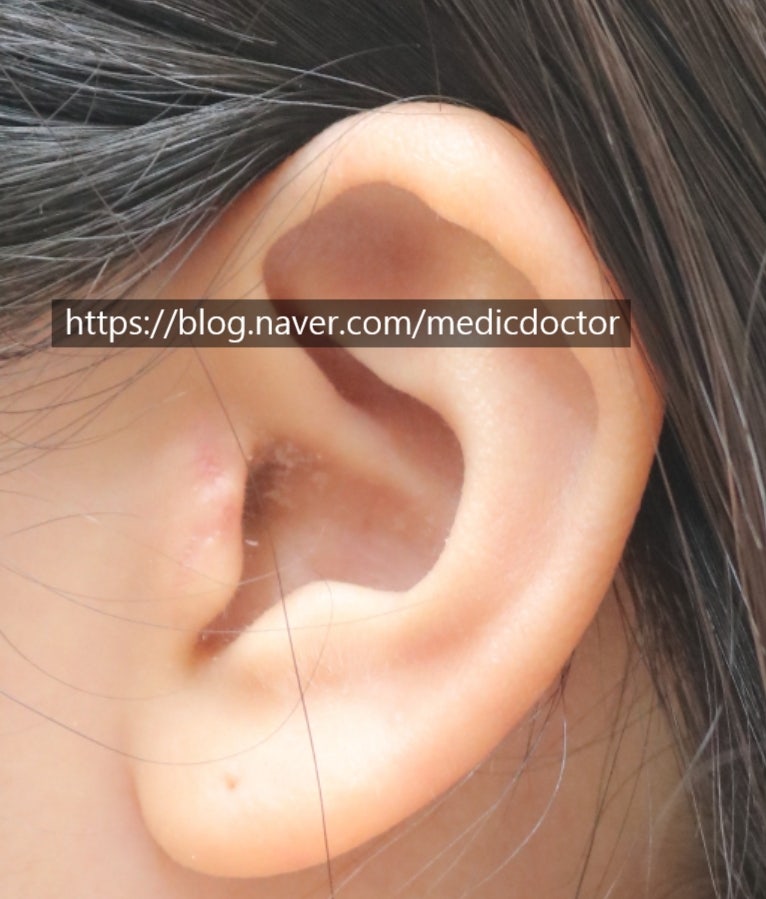
Three months after the surgery, the scar begins to fade significantly.
It is almost invisible, as if it were photoshopped. In fact, the area around the ear does not scar easily. This is why scars from harvesting ear cartilage for rhinoplasty are also barely noticeable.
Comparison between the pre-operative state and three months post-operation.
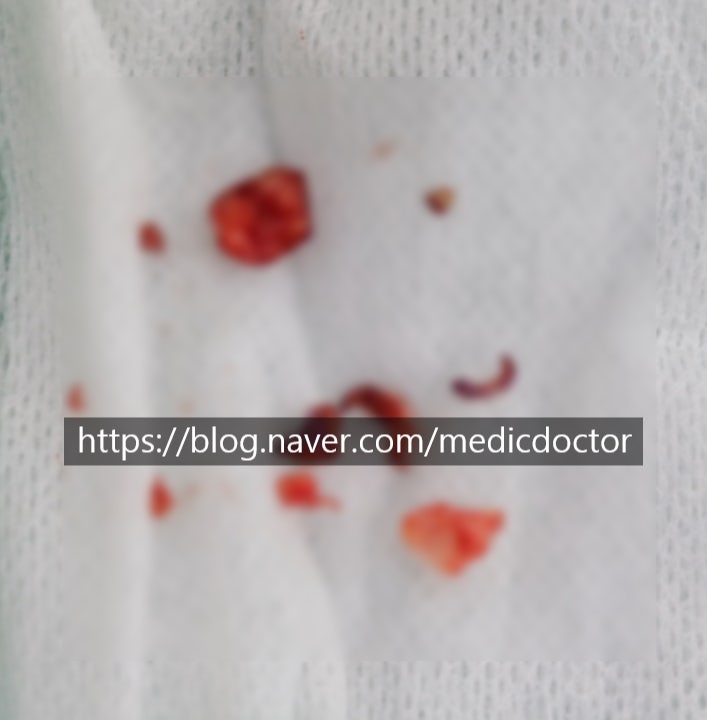
The removed cartilage and skin.
To achieve an aesthetically pleasing shape, it is not enough to simply cut it off. The remaining skin must be carefully trimmed and tailored. Just as high-quality fabric does not automatically result in a beautiful garment, the outcome depends heavily on the skill and experience of the surgeon.
Frequently Asked Questions
How is the removal surgery for preauricular skin tags performed?
After local anesthesia, the cartilage and skin inside the skin tag are precisely cut and removed. For adults, the procedure is usually simple with local anesthesia; since cartilage is often involved, it is removed along with the skin tag, and then the remaining skin is neatly trimmed and sutured.
When is the best time to perform ear skin tag surgery on young children?
It is most recommended to perform the surgery after the first grade of elementary school, when the child can tolerate injection pain. For very young infants, it can be difficult to remain still during surgery, potentially requiring sleep or general anesthesia, so it is better to wait until local anesthesia is feasible.
When are the stitches removed after ear skin tag removal surgery?
The stitches are removed one week after the surgery. Immediately after stitch removal, the incision site may be visible, but the area around the ear typically heals well without significant scarring, so the mark will fade over time.
Will there be a significant scar after the surgery?
No, the area near the ear is a part of the body where scars rarely remain, so you don't need to worry much. After about 3 months post-surgery, the scar will gradually fade and become almost invisible, and with the surgeon's skill in neatly trimming the remaining skin, recovery will be even cleaner.