2026-05-29
Examining a Case Study of the ‘Double-Line Extraction’ Technique
A detailed look at correcting sausage-like double eyelids using the double-line extraction method to restore tissue volume and lower the crease.
It has been a while since my last post.
Let’s examine a case study of the ‘double-line extraction’ surgery.
In some cases, the double eyelid can look like a ‘sausage’ even if the line itself is not exceptionally high.
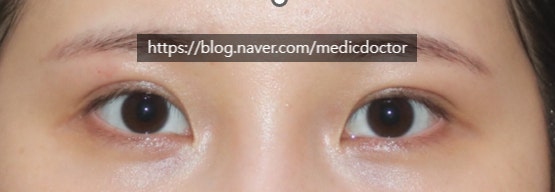
This patient visited the clinic because, although the line was not very high, it had a sausage-like appearance and looked unnatural even when the eyes were closed.
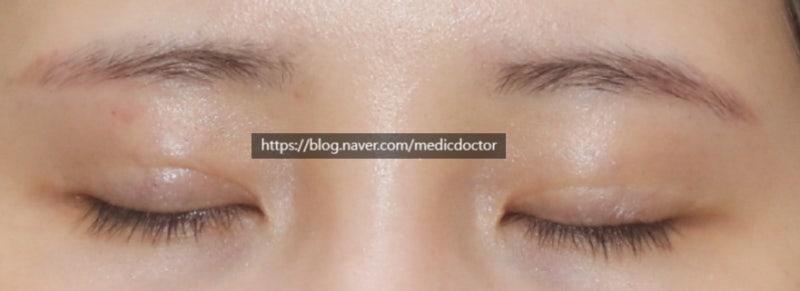
Looking at the photo with the eyes closed, the center appears sunken.
This indicates a lack of tissue in the middle, specifically a deficiency in the orbicularis oculi muscle.
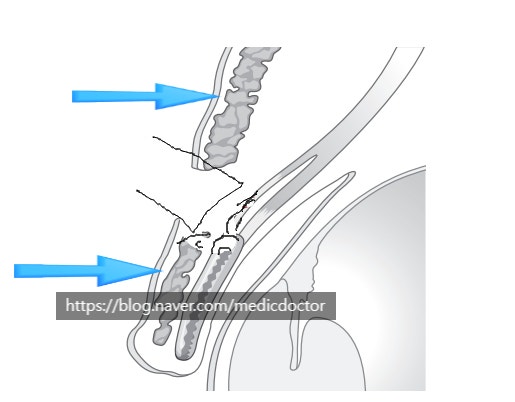
Looking at the diagram, the other tissues have been cut away, leaving only the skin layer in the middle.
This is often described as ‘strong fixation,’ but it is not because the threads were tied tightly.
Rather, the tissues that should make the surface look flat (such as the orbicularis oculi muscle, indicated by the blue arrow) have been removed entirely, leaving only the skin to cover the area.
While the removed tissue cannot be regenerated, we make every effort to gather surrounding tissue as much as possible to flatten the area.
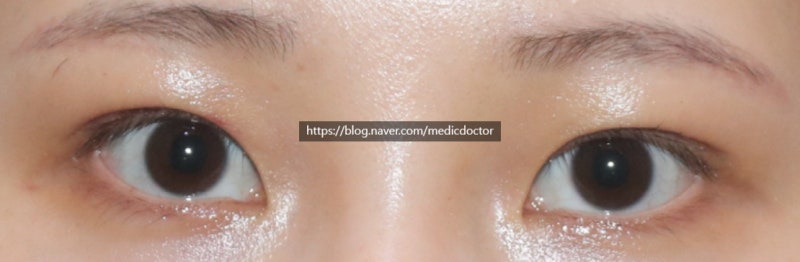
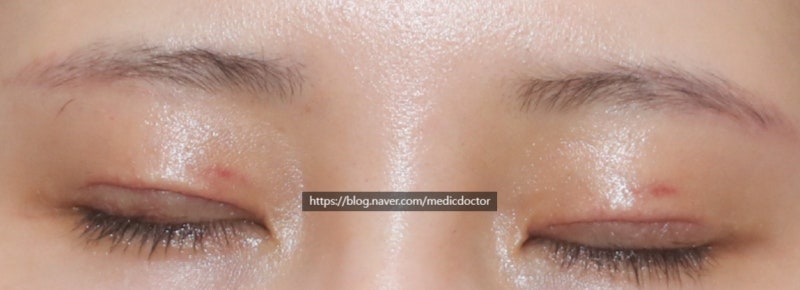
This is the appearance one week after surgery.
The white line above the incision is the previous crease, and the new incision line is visible below it.
At one week, the line may look uneven, but it improves over time. Scars may protrude slightly for up to three months before smoothing out again.
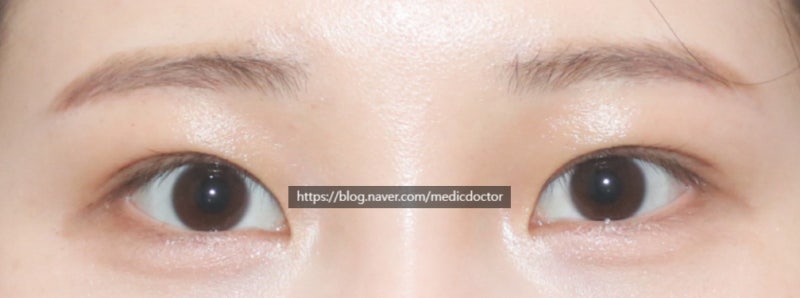
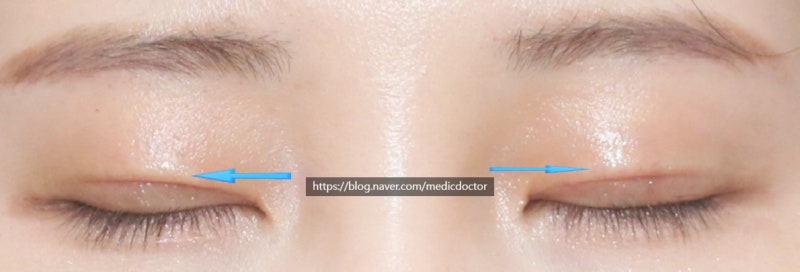
This is two weeks after surgery.
The appearance of excess flesh above the incision line will improve with time.
However, the more the line is lowered and the more severe the previous scarring was, the more likely some flesh will remain visible above the incision. This continues to improve significantly as time passes.
The previous scar is the faint white line (indicated by the blue arrow).
Laypeople often refer to this as a ‘step’ or ‘ledge,’ but it is not exactly a step; it is the previous scar tissue and remaining skin positioned to cover the lower double eyelid crease.
This also improves over time, though it may not disappear completely.
Refer to the previous blog post:
https://blog.naver.com/medicdoctor/222731602755
I will continue to introduce various cases in the future. Thank you.
Frequently Asked Questions
In what cases is double-line revision surgery necessary?
Double-line revision surgery is necessary when the double eyelid line doesn't appear high but still looks like a 'sausage eye,' or when closing the eyes creates an awkward, sunken appearance in the middle. This happens because previous surgery may have resulted in the loss of middle tissues like the orbicularis oculi muscle, leaving only skin to cover the area. Double-line revision can correct this by gathering surrounding tissues to create a flatter, more natural look.
When do scars become natural after surgery?
Scars typically become more natural over time after surgery, and they may appear raised for up to about 3 months. Around 1 week post-op, both the old line and the new incision might be visible, making it look uneven, but as the recovery period progresses, the raised scar will subside, and the condition will improve.
Do existing double eyelid scars completely disappear after surgery?
No, existing scars do not completely disappear. The old scar will remain as a faint white line, and the more the line is lowered or the more severe the original scar, the more skin may appear above the incision line. While it gradually improves over time, the scar itself does not disappear 100%.
Why does a step-like protrusion appear above the incision line after surgery?
What people commonly refer to as a 'step' is not an actual step, but rather the existing scar tissue and remaining skin that are present to cover the double eyelid underneath. This can appear prominent around 2 weeks after surgery, but it gradually improves and becomes more natural over time.