2026-05-29
Case Study: 3 Months After Double-Line Fold Lowering for Sausage Eyes
A clinical review of a patient who underwent the double-line fold lowering technique to correct high, asymmetric sausage eyes, showing progress from 1 week to 3 months post-op.
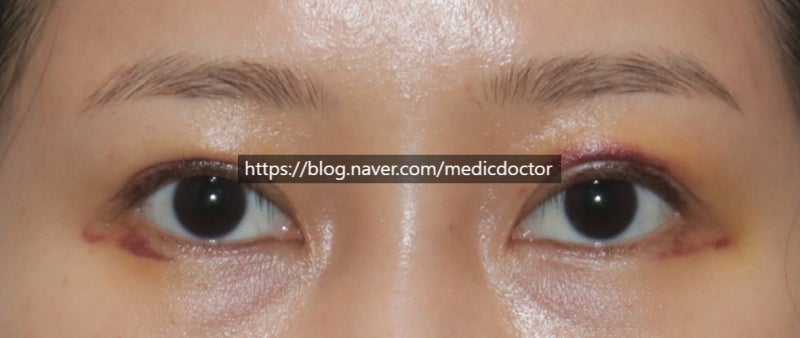
I would like to share a post today featuring photos of a patient who recently visited for a follow-up.
Case Study: 3 Months After Double-Line Fold Lowering for Sausage Eyes
The patient visited the clinic to improve asymmetry and the appearance of ‘sausage eyes.’
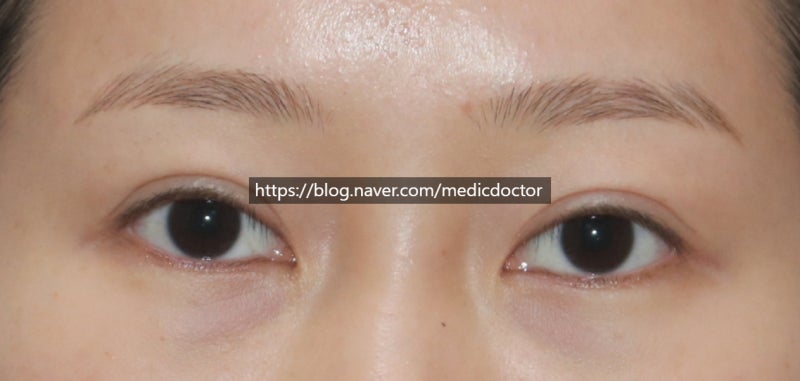
The crease lines were high and differed on each side.
They had a puffy sausage-like appearance, and visible scarring was present.
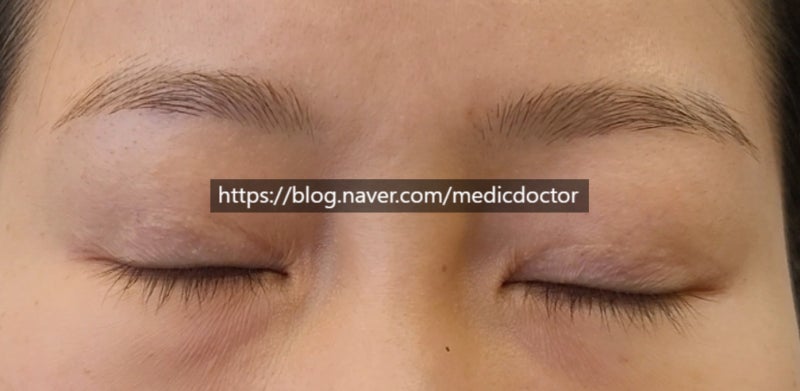
Since the patient lacked sufficient skin to simply excise and lower the line, I used the ‘double-line fold lowering’ method (releasing the existing scar tissue and creating a new line below it) to lower the crease.
This is at the one-week mark during stitch removal. Despite the remaining swelling, the line has been significantly lowered.
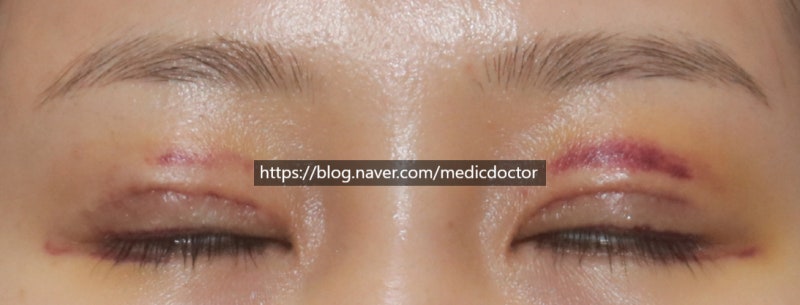
At one week, the previous scar was released and the new lower line was set. There is a slight case of lagophthalmos (incomplete eye closure); this is usually temporary as the tone of the orbicularis oculi muscle decreases after surgery.
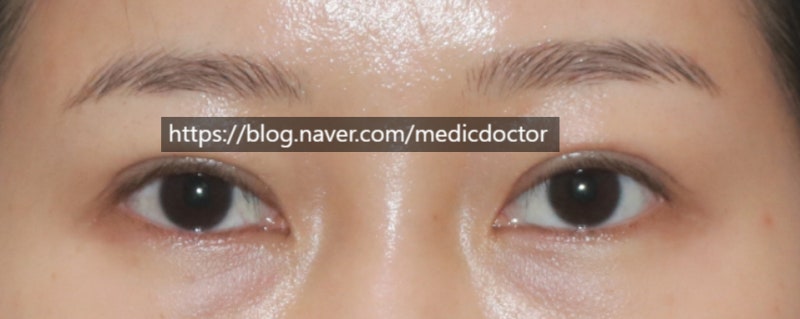
Appearance at one month. Swelling is still present. While the line is lower than before, it remains in a swollen state.
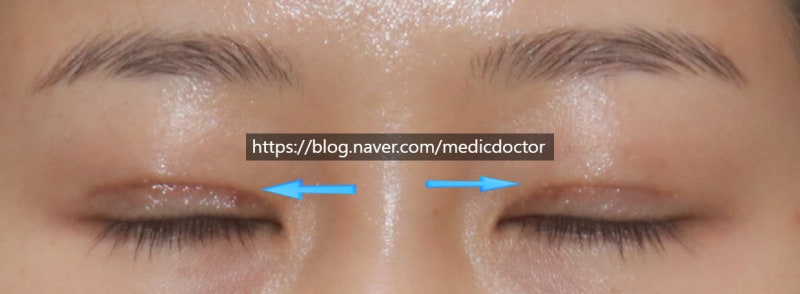
At one month, the scar tissue is still firm, and there is some protrusion of the scar at the front. The original scar is already starting to become less visible.
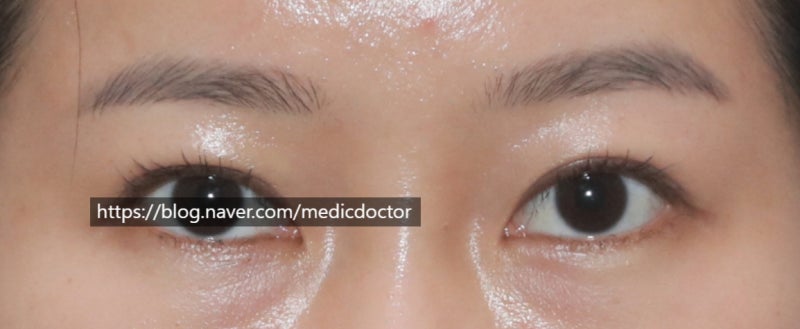
Progress at 3 months. The line has settled much lower.
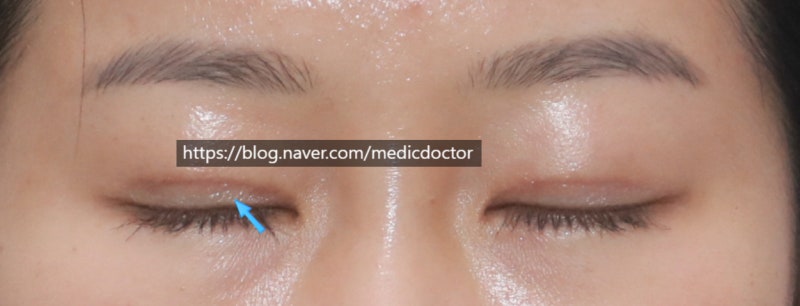
Some redness remains, but the results are being maintained well without any specific issues. However, a small breakout occurred, which I treated during the visit. You can see a small pimple in the center of the left side of the photo (the patient’s right eye).
The patient went home after the treatment today. ^^
After 6 months, both the old and new scars will likely be even less noticeable.
I want to emphasize once again that if there is sufficient tissue remaining, scarring can be minimized; however, if there is a lack of healthy tissue, scar improvement can be challenging.
Frequently Asked Questions
In what cases is the sausage eye double-line revision surgery performed?
Yes, it is mainly performed when the double eyelid line is high, asymmetrical, or has a 'sausage' appearance and scarring. This method is especially applied to patients who want to lower the line but lack sufficient skin, by releasing the existing scar and creating a new line below it.
Can my eyes not close completely after surgery?
Yes, in the early stages after surgery, a slight lagophthalmos (inability to close the eyes completely) may occur. This phenomenon is caused by a decrease in the tension of the orbicularis oculi muscle after surgery, and it is mostly a temporary symptom, so you don't need to worry too much.
When do swelling and scars improve after double-line revision surgery?
They usually improve gradually over 3 to 6 months. Swelling may be present and scars may appear hard or raised until about 1 month after surgery, but by the 3-month mark, the line will be significantly lower, and after 6 months, both the old and new scars will fade to be less noticeable.
What conditions are necessary to minimize scars after surgery?
Yes, sufficient normal tissue must remain in the eyelid to minimize scarring. The more normal tissue preserved in the surgical area, the more favorable it is for scar improvement; conversely, if there is not much normal tissue, scar improvement may be difficult.