2026-05-29
Epicanthoplasty Reconstruction: 1-Week Post-Op Swelling and Progress Review
A case study of a male patient undergoing epicanthoplasty reconstruction to correct excessive lacrimal lake exposure, featuring 1-week recovery progress.
Today’s topic is a post about the
Epicanthoplasty Reconstruction: 1-Week Post-Op Swelling and Progress Review
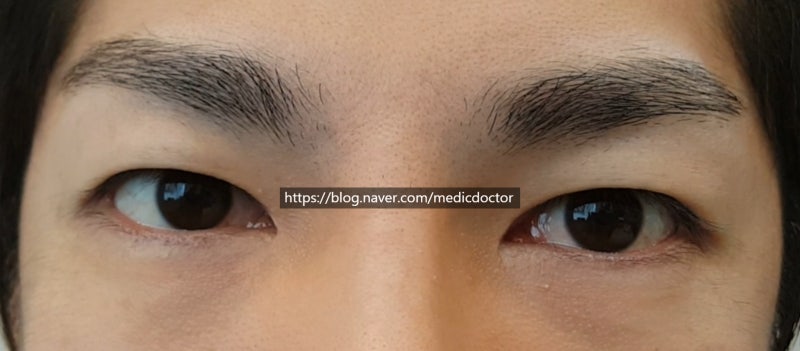
The patient was a male who visited our clinic seeking epicanthoplasty revision because his lacrimal lake (caruncle) was excessively exposed following a primary epicanthoplasty at another clinic.
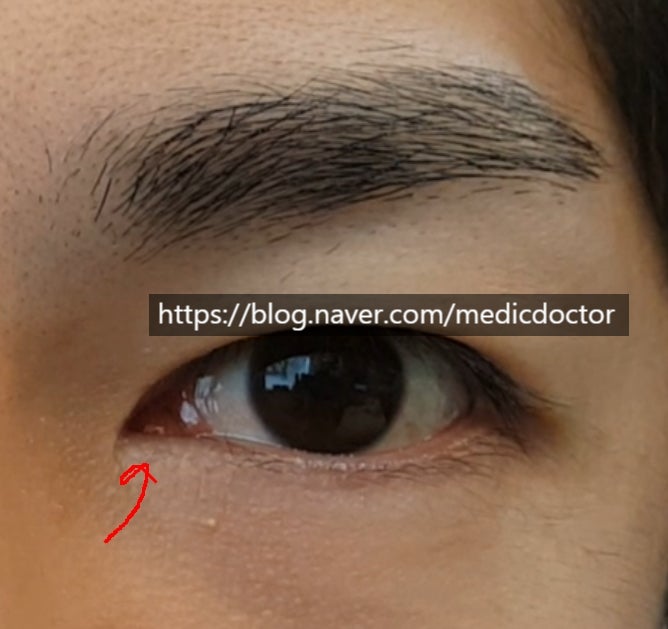
The exposure of the lacrimal lake at the front is at 100%.
Generally, when I perform epicanthoplasty, I adjust the lacrimal lake exposure to about 70–80%.
As for the reason why...
Please refer to these two previous lectures I have given. ^^
https://blog.naver.com/medicdoctor/221352835866
If the lacrimal lake is too exposed, it can make one’s impression look sharp or aggressive.
Therefore, for this patient, I proceeded with the surgery using the ‘Transposition Flap Reconstruction’ method, which is the epicanthoplasty reconstruction technique I published in my research paper.
Reference to my paper:
https://blog.naver.com/medicdoctor/221640695973
Looking at the photo above, you can see that the lacrimal lake exposure at the front is 100% before the surgery.
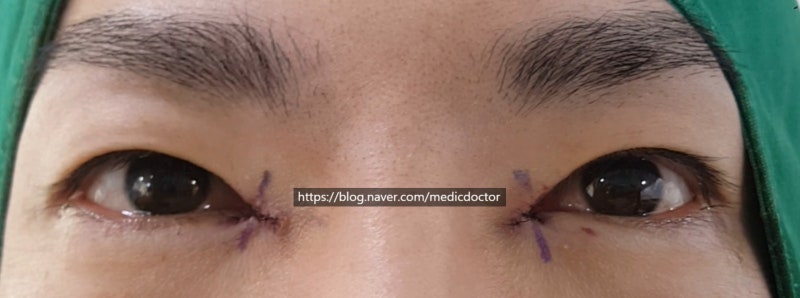
Immediately after the surgery, the designated areas have been closed appropriately as planned.
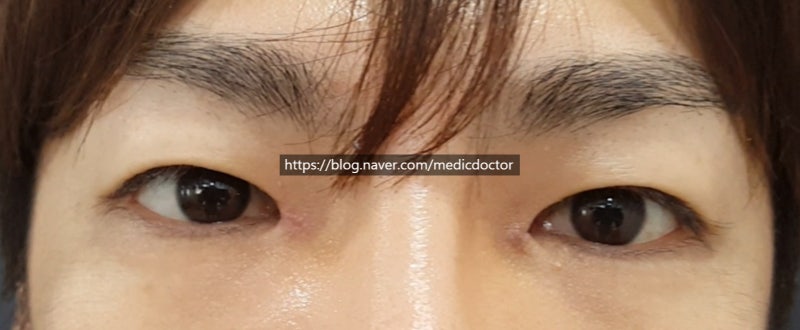
At the 1-week mark, marks are still visible and there is swelling, but the shape is being maintained well.
We will need to continue monitoring the progress.
And now, a parade of videos. I feel like my video editing skills are improving over time...
What is the most important takeaway?
Instead of opening too much and then having to close it back up, always consult thoroughly with the patient and aim to open just enough—as if it were slightly conservative!
Frequently Asked Questions
What is an appropriate level of caruncle exposure during epicanthoplasty?
Typically, 70-80% caruncle exposure is appropriate. If the caruncle is excessively exposed, close to 100%, it can make the impression look fierce, so it is best to open it slightly less than desired after consulting with the patient during the initial surgery.
What methods are used for epicanthoplasty revision surgery?
We use the transposition flap technique for epicanthoplasty revision surgery. This is a method for epicanthoplasty revision and Mongolian fold restoration that the surgeon directly published in a prominent American academic journal, and it effectively closes excessively exposed caruncles to an appropriate degree.
What are the swelling and progress like one week after epicanthoplasty revision surgery?
One week after surgery, the stitches are removed, and there are still surgical marks and swelling. However, the closed area immediately after surgery is well maintained, and the recovery status will be continuously monitored thereafter.
What are the main reasons for deciding to undergo epicanthoplasty revision surgery?
The main reason is excessive caruncle exposure after surgery at another hospital. The male patient in the text also had 100% caruncle exposure and visited us for epicanthoplasty revision surgery to improve his fierce impression.