2026-05-29
Undoing Natural Adhesion: Why Multi-Knot Double Eyelids Are Difficult to Remove
Learn why multi-knot buried sutures are harder to remove than single-knot methods and how surgical techniques differ during the removal process.
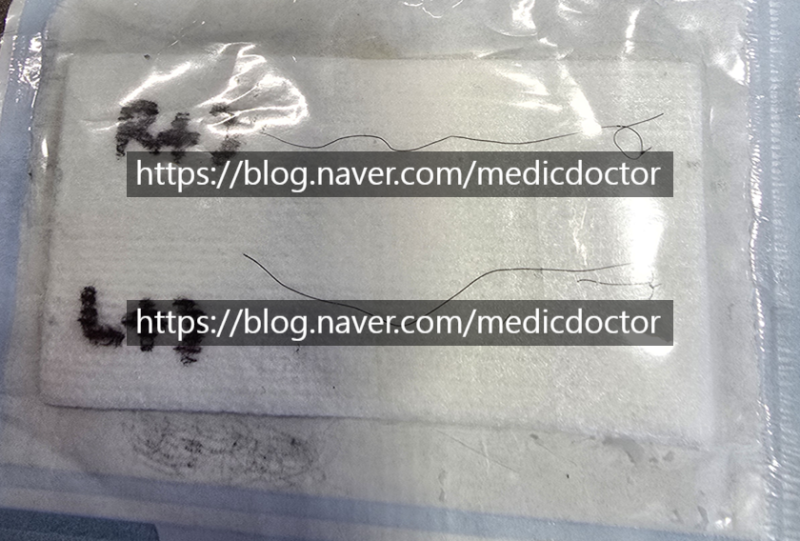
Occasionally, patients who have undergone natural adhesion surgery (buried suture method) visit us wanting to undo their results, only to discover they have multi-knot sutures.
Typically, most buried suture methods are performed using a single-knot technique.
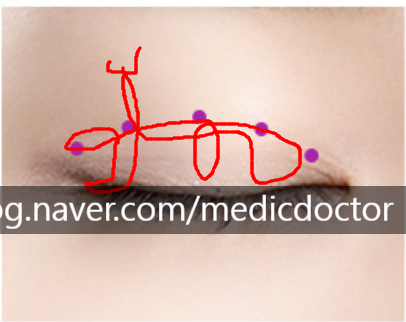
In this case, when a single knot is formed at the end of the entry point, the entire thread can be pulled out smoothly once it is caught.
Usually, when the thread is extracted, this is the most common length, although lengths can vary.
It may be shorter or longer depending on the individual case.
However, in multi-knot methods, the threads are extremely small and deeply embedded. Sometimes patients do not remember the specific technique used, or the original clinic provided incorrect information, leading to the discovery of multiple knots during the suture removal surgery.
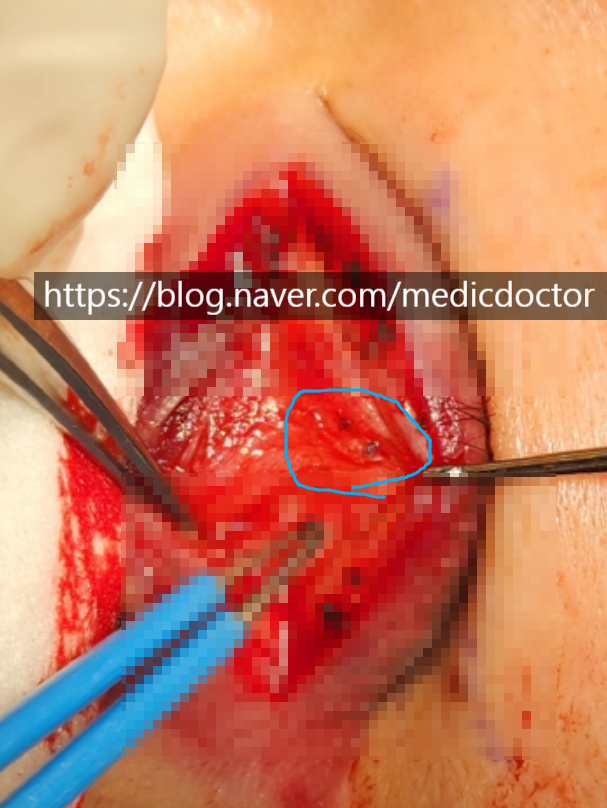
When reopening the area through an incision, the threads are found embedded like this, making removal very difficult.
They become incredibly hard to locate. With some luck, one or two might be found, but it is often impossible to know exactly how many threads were originally inserted.
Among those with multi-knot sutures, some patients occasionally opt to proceed directly with an incisional revision on the same day.
For those with thick double eyelid folds who wish to lower the line, it is possible to perform an incisional procedure on the same day.
In contrast, because single-knot methods involve a long, continuous thread, removal is almost always possible using our clinic’s specialized equipment and unique techniques.
Frequently Asked Questions
Is it possible to remove the thread after natural adhesion double eyelid surgery?
Yes, if it's a single-knot method, it's usually possible to remove it. This is because a single knot is connected at the end of the hole, so if you pull out the thread, the entire thing comes out. It can be safely removed using our clinic's special equipment and technology.
Why is it difficult to remove the thread from multi-knot double eyelids?
Multi-knots are difficult to remove because very small threads are deeply embedded in the tissue. Even if you reopen it through an incision, it's very hard to find the threads, and even if you're lucky enough to find one or two, it's difficult to completely remove them because you don't know how many threads were inserted in total.
How do I know if I have a multi-knot or single-knot double eyelid?
Accurate confirmation can be obtained by performing actual thread removal surgery or by checking the records of the hospital where the surgery was performed. Patients often don't remember well or are misinformed by the hospital, so it's sometimes revealed to be a multi-knot during actual thread removal surgery.
What should I do if I want to lower a multi-knot double eyelid line?
Instead of thread removal, you can consider revision surgery using the incisional method. If the double eyelid is too thick and you want to lower the line, some people choose to proceed directly with an incisional procedure on the same day to correct the line, rather than forcibly trying to find the multi-knot threads.