2026-05-29
Uneven Eyes Correction Review: Understanding the Principles - Price Isn’t Everything
Learn the principles of correcting uneven eyes through a real case study. Discover why skeletal asymmetry matters more than just price in achieving natural results.
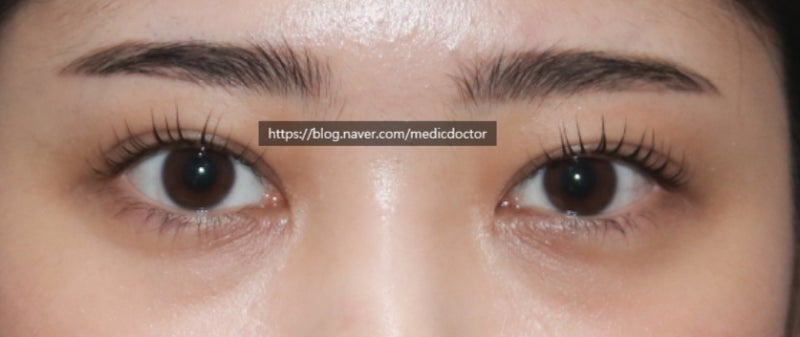
Understanding the Principles of Uneven Eyes Correction
It has been a while since my last post. I want to emphasize that one must understand the principles of correcting uneven eyes and perform the surgery accordingly.
Usually, when we say someone has ‘uneven eyes,’ it means one eye is larger or smaller than the other.
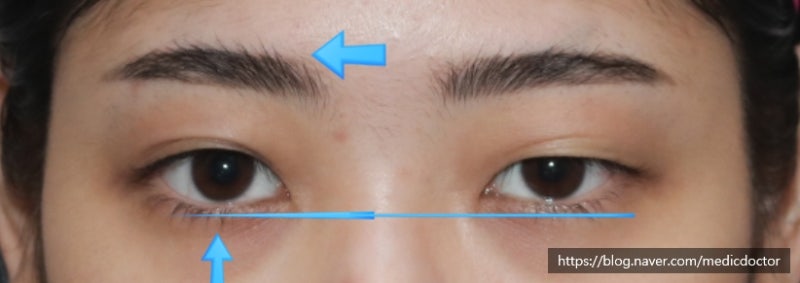
Looking at this patient, one eye appears to open less than the other, and while one side has a crease that looks like a double eyelid, the other side does not.
The eyebrows also look like they might have been tattooed, but if you look closely, the right eyebrow is higher and the left eyebrow is lower.
In short, it is facial asymmetry.
Furthermore, the right lower eyelid (indicated by the arrow) is also lower. The skeletal structure itself is larger on the right side.
In such cases, correction is achieved by slightly varying the degree of ptosis correction and appropriately adjusting the skin on one side.
Refer to the previous post:
https://blog.naver.com/medicdoctor/221675433738
This is the appearance after 4 months.
Although the skeletal structure itself is larger on the right, the overall feel is almost symmetrical.
This patient underwent incisional ptosis correction and epicanthoplasty.
The scars are not very noticeable, and the result looks natural.
Frequently Asked Questions
What are the main causes of uneven eyes?
Yes, facial asymmetry and skeletal differences are the main causes. Uneven eyes occur when one eye opens smaller than the other, or when the height of the eyebrows and the position of the lower eyelids differ on both sides.
Can uneven eyes caused by skeletal differences be corrected?
Yes, correction is possible. Even if one side of the skeleton is naturally larger, surgery can achieve results close to symmetry by adjusting the degree of ptosis correction differently for each eye and appropriately adjusting the skin.
What kind of surgery did the case study subject receive?
The subject underwent incisional ptosis correction and epicanthoplasty simultaneously. This corrected the size and asymmetry of the eyes, creating a natural eye shape without scars.
Are there many scars left after uneven eye correction surgery?
No, scars are not very noticeable. Reviews from 4 months after the surgery show that scars are barely visible and recovery is very natural.