2026-05-29
Solutions for Thick Eyelids After Ptosis Correction
Learn why eyelids become thicker after ptosis correction and how to address this issue through ROOF fat removal and SMFAT tissue management.
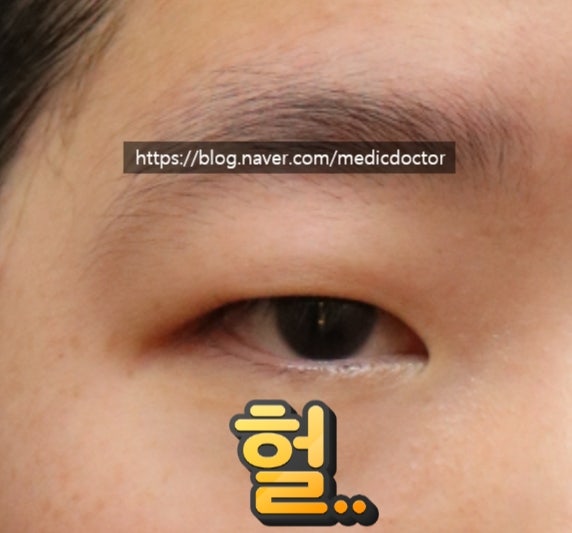
When ptosis correction is performed, volume increases directly below the eyebrows—specifically, above the double eyelid fold.
In such cases, patients often experience a thickening of the upper eyelid area after the procedure.
If surgery is performed on eyes that are already naturally puffy, they will inevitably become even thicker.
I have posted about this topic previously, and referring to that content may be helpful.
By removing ROOF (Retro-Orbicularis Oculi Fat) and the orbicularis oculi muscle along with connective tissues in the eyelid, the puffiness following ptosis correction can be reduced to some extent.
However, unfortunately, it is difficult to achieve perfectly thin skin.
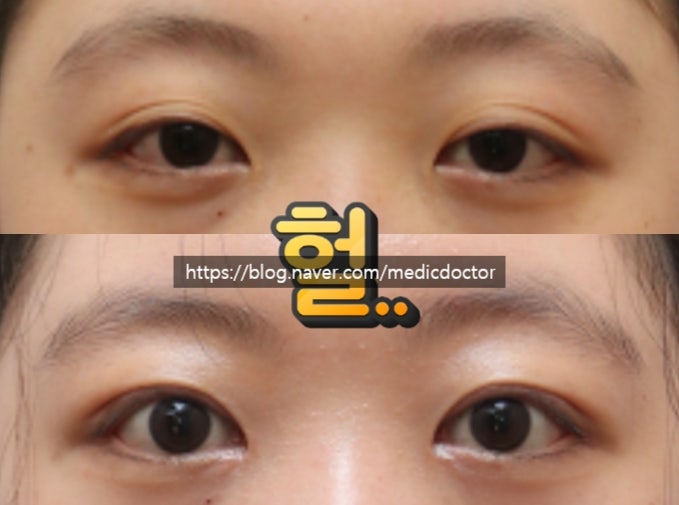
This is the appearance after approximately six months.
While some degree of thickness remains, it does not look significantly awkward.
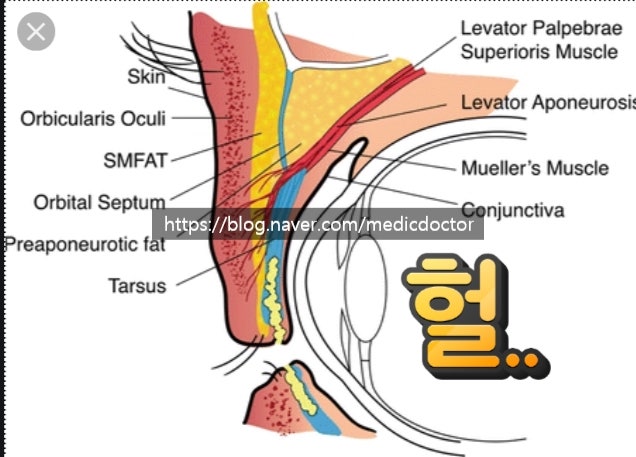
It is crucial to properly remove the section corresponding to the SMFAT (Submuscular Fibroadipose Tissue).
However, if excessive bleeding occurs or adhesions form during the removal process in this area, it can lead to the formation of triple eyelids.