2026-05-29
Don’t Do the ‘Two-Line Method’ (Dujulttagi)? Is It Really a Surgery You Should Avoid?
A professional look at the 'Two-Line Method' for eyelid revision. Learn why it is essential for patients with insufficient skin and why expert skill is required.
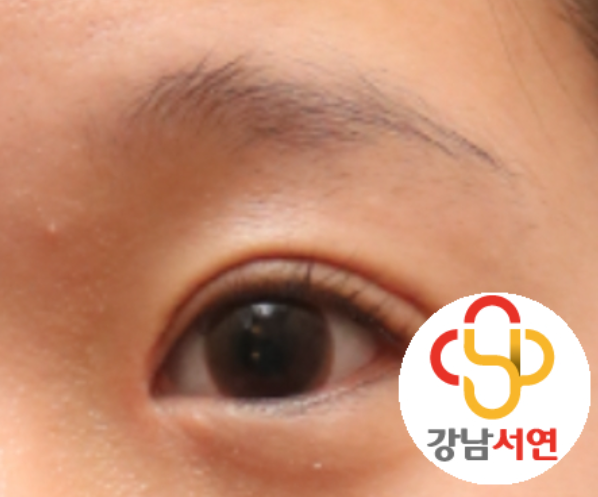
Don’t do the ‘Two-Line Method’??
A patient recently came for a revision consultation and mentioned that a doctor at another clinic told them that the ‘Two-Line Method’ (Dujulttagi) is a surgery that should never be performed.
For those unfamiliar with the term ‘Two-Line Method’, please refer to my previous blog post first:
Two-Line Method: Revision for Thick Double Eyelids (Sausage Eyes) .. : Naver Blog (naver.com)
This was content I wrote in 2018 based on a lecture I gave at an academic conference in 2016.
Is the Two-Line Method really a surgery that should never be done?
As I noted in the blog above, the ideal method is to excise the existing scar tissue and lower the line. This is the best approach because it removes the scar and creates a new fold using healthy tissue, leaving only a single scar line with a natural, weak fixation.
However, there is a critical caveat. If a person lacks sufficient skin to lower the line but undergoes skin excision (cutting), they will run out of skin, turning their condition into ‘extreme eyes’ where further revision becomes impossible.
While most cases requiring the Two-Line Method are already considered ‘extreme eyes’, they are still eyes that can be operated on. If you cut away skin when there isn’t enough, they become truly inoperable.
Furthermore, the Two-Line Method is a procedure that requires a board-certified plastic surgeon who has mastered eyelid surgery. If not performed correctly, severe triple folds or various complications can occur. If a surgeon cannot manage these complications, it is indeed better not to perform the surgery. It is possible that non-specialists claim it shouldn’t be done simply because they lack the skill to perform it.
Early Re-correction after Two-Line Method Failure (feat. Triple Folds.. : Naver Blog (naver.com)
Triple folds like this can occur. If they do, one should not just wait for them to get better but should treat them actively.
‘Does the Two-Line Method leave two scars and create a visible step/ledge?’
This is also not true.
Two-Line Method Scars vs. Low Double Eyelid Scars, Incisional.. : Naver Blog (naver.com)
The lower you set the line, the more this phenomenon occurs; it happens in most cases where men’s eyelids are made into ‘inner double eyelids’ during their first surgery. This is because the skin drapes over and partially hides the fold. As people age and their skin sags, even those with natural double eyelids develop sagging skin over the line that looks like a ‘step’. Therefore, this is not a complication but a natural anatomical result.
Non-specialists who lack deep knowledge might misunderstand this. It is always best to check if your surgeon is a board-certified plastic surgeon first.
Personally, when I examine a patient, I look at their condition first. If there is enough skin, my principle is to excise the scar tissue. However, if there is no skin to spare, I perform the Two-Line Method first. If I find excess skin during the procedure, I may excise it then, while informing the patient.
In rare cases where the skin is insufficient but under high tension, simply making an incision and releasing the fixation to a lower point can lower the line, but this is not common.
Also, if there is skin but the scarring is severe, the Two-Line Method may result in some wrinkling after surgery. In such cases, I proceed after informing the patient in advance. It is a matter of weighing the pros and cons.
If you have been told by a non-expert not to do the Two-Line Method, there are a few things you should question:
1. In online communities, some people claim their scars became severe after the Two-Line Method when, in reality, the scars aren’t that bad but the individual is overly sensitive. They may not remember their original state or had unrealistic expectations. In most cases, the post-op result is better than the pre-op state.
2. Some non-plastic surgeons pretend to be experts and badmouth the Two-Line Method because they cannot perform such high-difficulty surgeries. They may act as if they are looking out for the patient by saying ‘the Two-Line Method is the absolute last resort’. In reality, cutting skin when it’s already lacking is what makes it the ‘last resort’ by making further surgery impossible.
3. Most people with successful results are satisfied and move on, perhaps writing a brief review. They don’t spend years posting online. Occasionally, someone who had a failure, personal dissatisfaction, or a specific fixed belief despite a successful surgery will post continuously. This can make it seem like the surgery should be avoided, even though the vast majority of patients have successful outcomes.
4. Some clinics suggest fat grafting or ptosis correction as a requirement for the Two-Line Method. These are not mandatory; I perform these alongside the Two-Line Method in less than 5% of cases.
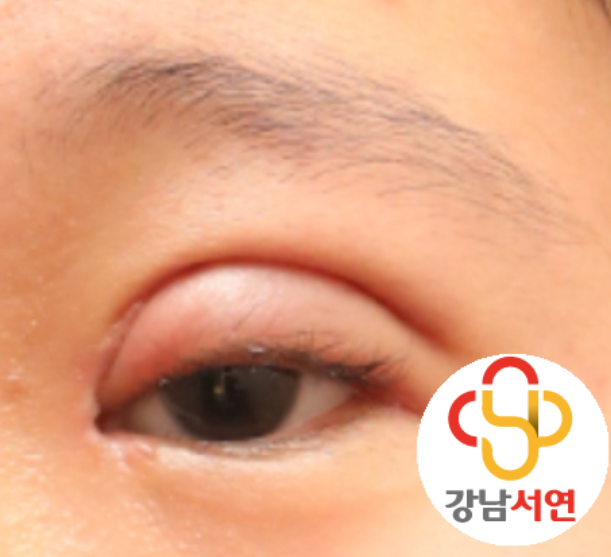
For a patient with an absurdly high line like this, excising skin would be disastrous, and trying to create a shape within the existing incision line is simply illogical.
Frequently Asked Questions
Is double-line revision surgery an absolute no-go?
No, it is an essential surgery for patients with insufficient skin. If there is not enough skin and the scar is excessively removed, the eye may become untreatable for further revision surgery. In such cases, it is safer to lower the line through double-line revision.
Does double-line revision leave a double scar line, creating a step?
Yes, this is a natural phenomenon that can occur when the double eyelid line is lowered. This is not a complication of the surgery but a normal result that appears because the double eyelid is partially covered as the skin drapes over it. It is similar to the phenomenon that occurs when skin sags with age.
Are there any side effects when undergoing double-line revision surgery?
If performed by an inexperienced medical professional, complications such as severe multiple folds can occur. Double-line revision is a highly difficult surgery that must be performed by a plastic surgeon proficient in eye surgery, so it is crucial to verify the specialist's qualifications before deciding on the surgery.
Is it necessary to combine double-line revision with ptosis correction or fat grafting?
No, it is not a mandatory requirement. Although it varies depending on the patient's condition, cases where double-line revision surgery is accompanied by ptosis correction or fat grafting are very rare, less than 5%. Caution is needed if you are advised to undergo unnecessary procedures.