2026-05-29
Post-Operative Care for Double Eyelid Surgery
A guide on essential post-operative care for double eyelid surgery, including tips on preventing unwanted adhesions, managing swelling, and cleaning blood clots.
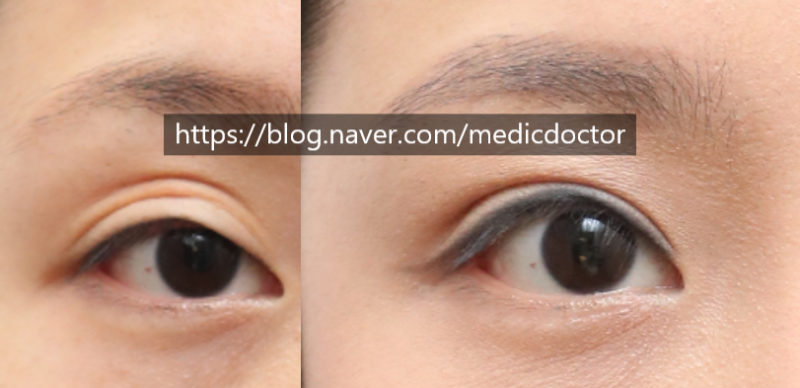
I would like to post about #PostOperativeCare for double eyelid surgery.
Even though I explain the instructions to patients when they go home after surgery, many seem to forget them because it is right after the procedure. Therefore, I have organized the details here.
This summary covers the period following common #EyeSurgery (such as #UpperBlepharoplasty, #LowerBlepharoplasty, #DoubleEyelidSurgery, #Epicanthoplasty, #LateralCanthoplasty, etc.).
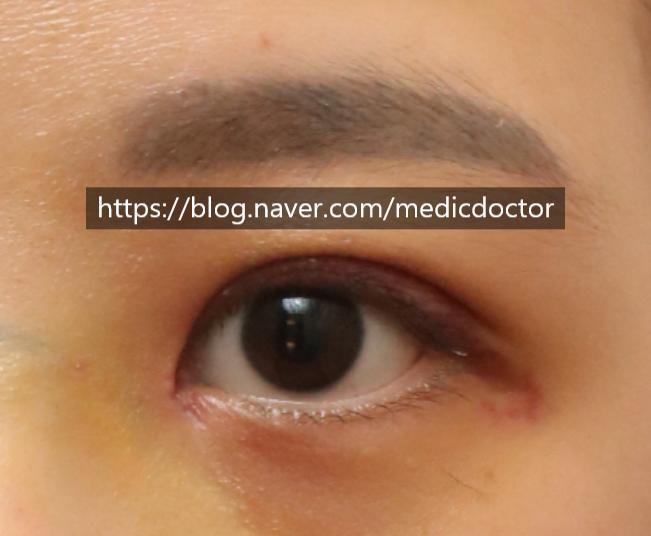
Please note that management methods and preferences may vary by hospital or surgeon, so my advice is not the only ‘correct’ answer. However, I highly recommend these steps for my own surgical cases.
1. Preventing Adhesion in Unwanted Areas
At our clinic, we advise patients to practice opening their eyes wide frequently starting immediately after surgery.
Particularly in cases of #DoubleEyelidRevision, I recommend staying awake until late at night or watching a movie to keep the eyes active.
If there was severe scarring previously, re-adhesion can cause the double eyelid line to fold in an undesirable direction. Furthermore, if ptosis correction was performed, the corrected area might adhere in a way that makes the eye look small again despite the surgery.
This can lead to asymmetry between the two sides.
2. Compresses
Should you use compresses?
While light compresses are fine if you feel pain, I do not believe that diligent compressing significantly speeds up the reduction of swelling.
In fact, I believe keeping a compress pack on while the eyes are closed can be counterproductive. I find that the eye-opening and closing exercises mentioned above are much more helpful.
Additionally, if water from an ice pack enters the wound, it can cause inflammation. Therefore, I recommend using them only intermittently when experiencing pain.
3. Scabs (Blood Clots)
If blood clots form on the eyelids and create scabs, they must be removed properly.
I do not apply gauze over the eyes after surgery.
This is because I believe it interferes with opening the eyes—though this is my personal professional opinion.
Immediately after surgery, blood clots may stick to the wound site.
These can be easily removed by applying a small amount of ointment to a cotton swab to soften them. Alternatively, you can use a clean gauze soaked in saline to gently dab them away.
Excessive blood clots are not only aesthetically unpleasing but can also hinder the clean healing of the scar.
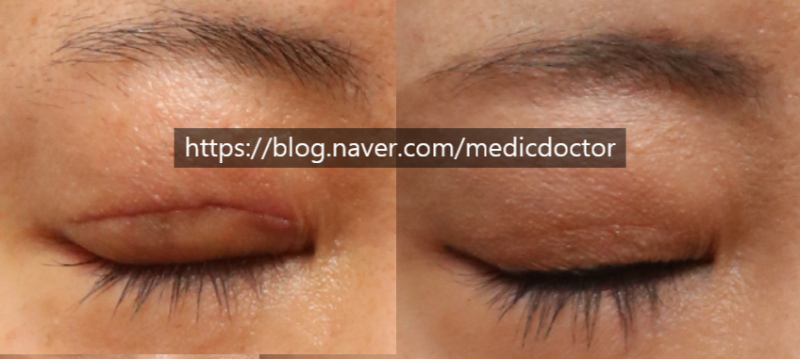
If the blood clots are severe, apply a generous amount of ointment and leave it for about 2 hours until the clots soften. Then, gently push them off with a cotton swab. Once removed, apply a thin layer of ointment to the wound again.
However, do not apply too much ointment, as it can be detrimental if the ointment itself hardens.
Apply just enough to make the area look ‘glossy,’ similar to the natural oils on one’s face.
Frequently Asked Questions
Is it good to continue applying a warm compress after double eyelid surgery to reduce swelling?
No, it is difficult to say that a warm compress will quickly reduce swelling. It is recommended to apply it intermittently only when there is pain. In fact, practicing opening and closing your eyes is more helpful for recovery than simply closing your eyes and placing a compress pack on them.
Why should I practice opening my eyes wide after surgery?
Yes, it is to prevent adhesion to unwanted areas. Especially in cases of double eyelid revision surgery or ptosis correction, practicing opening your eyes wide is very important to prevent existing scars from re-adhering, which could cause the line to crease or become asymmetrical.
How should I remove scabs that have formed on the surgical site?
You should gently remove them using ointment or saline solution. Apply ointment to a cotton swab and rub it, or gently peel it off with gauze soaked in saline solution. If the scab is severe, apply a generous amount of ointment and leave it for about 2 hours until it softens, then gently push to remove it.
How much ointment should I apply to the wound area?
You should apply a thin layer, just enough to make your face slightly shiny as if it has a bit of oil. Applying too much ointment can cause the ointment itself to harden, which can negatively affect wound healing, so it is important to apply an appropriate amount.