2026-05-29
Eyelid Retraction Correction, Revision Surgery for Ptosis Overcorrection
Learn about eyelid retraction correction surgery, a specialized procedure to fix overcorrected ptosis that results in a ‘surprised’ look and functional issues.
Eyelid Retraction Correction, Revision Surgery for Ptosis Overcorrection, Eyelid Retraction Surgery
I have chosen this as our current topic.
Over the past decade, the frequency of performing ptosis correction alongside double eyelid surgery seems to have increased significantly compared to the past.
However, while there are many successful cases, there has also been a rise in side effects corresponding to that increase.
In particular, ptosis correction—which is intended to make small, sleepy-looking eyes appear larger—can sometimes result in overcorrection, making the eyes look startled and causing functional side effects.

This is a case where the eyes do not just open normally but open excessively wide.
First, let’s clarify the terminology.
What we commonly call ‘retraction correction surgery’ is a procedure to correct a condition where the eyelid is retracted.
The term is often misused. Some mistakenly believe ‘retraction’ refers to the act of moving the eye-opening muscle backward, but that is incorrect.
Retraction refers to the state where the eyelid is pulled up too high, resulting in the excessively wide-open look seen in the photo.
Therefore, retraction correction surgery is the procedure used to fix these retracted eyes.
I urge you to seek treatment from a board-certified plastic surgeon who uses the correct terminology and understands the precise surgical methods.
As shown in the photo, simply removing the sutures from a previous ptosis correction will never fix a retracted eye.
The patient in
They were told the eye-opening muscle was released and separated down to the Müller’s muscle, yet no correction occurred at all.
That approach does not work for correction.
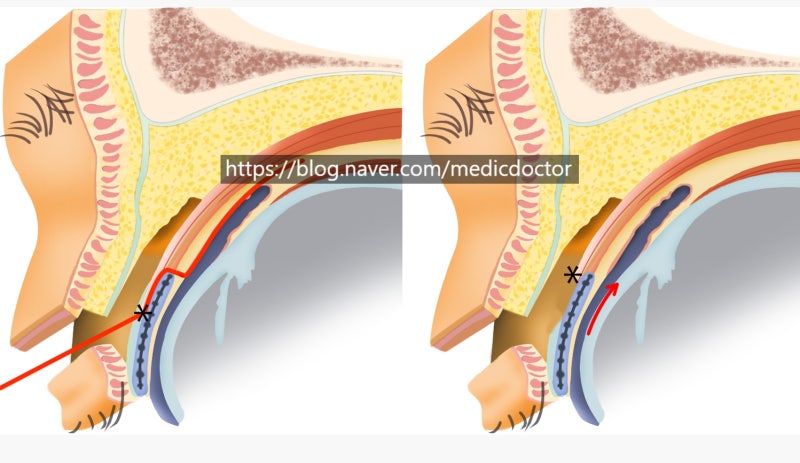
Retraction correction surgery is performed by separating the eye-opening muscle (levator palpebrae superioris) from the tarsal plate to expose the Müller’s muscle, and then further separating the Müller’s muscle from the conjunctiva.
This process is the core of the surgery. For reference, this procedure involves many variables and is difficult for someone without extensive experience in eyelid surgery to perform.
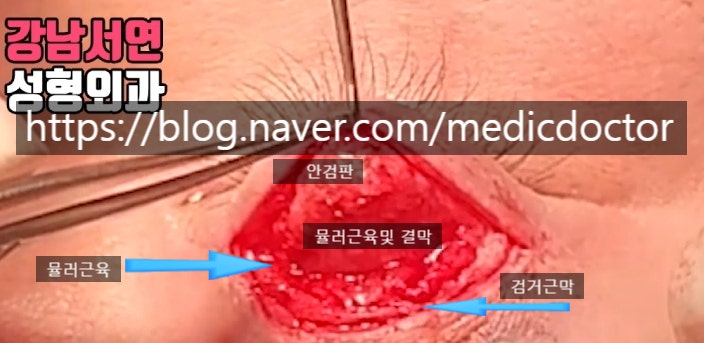
Adhesions must be released through careful and precise dissection, step by step.
While there is significant bleeding during this stage, experienced surgeons manage hemostasis well, allowing the surgery to proceed smoothly.
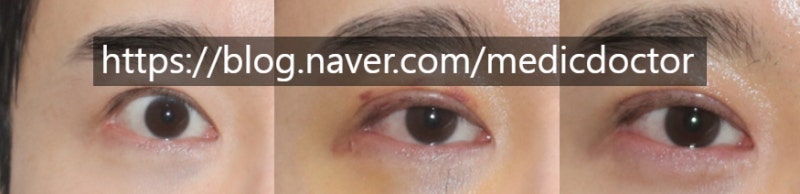
In this manner, the eye-opening muscle is released, allowing the retracted eyelid to lower.
This is also a patient one week after surgery. The area where the outer corner of the eye was pulled upward has been successfully corrected.
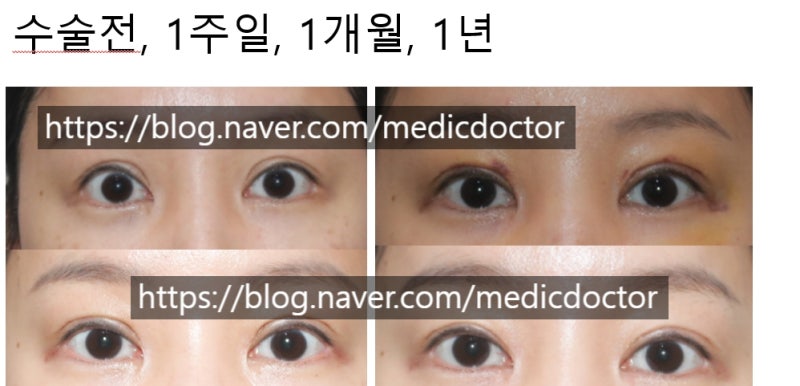
However, eyelid retraction correction surgery involves several variables.
Sometimes the eye looks corrected initially, but the opening becomes larger again later. If the eye starts opening too wide again within 2 to 3 weeks, early revision is essential. The probability of needing early revision is relatively higher compared to other surgeries. However, this does not happen to everyone, so do not worry too much.
Additionally, the risk of asymmetry is relatively higher than in other procedures. Again, this is not a guaranteed outcome. If a difference in the double eyelid line occurs, we perform a touch-up after 6 months. We do not perform early revision for line differences because there are too many variables involved during the healing phase.
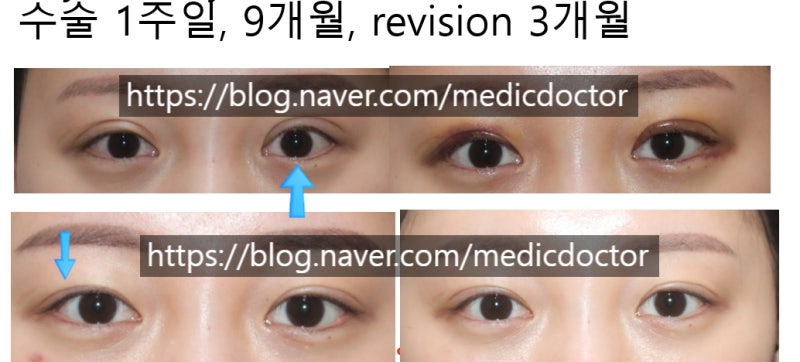
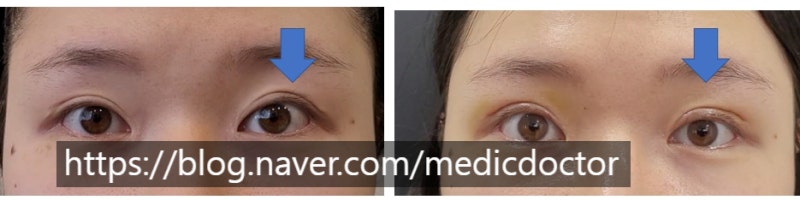
In this patient’s case, the left eye (right side in the photo) was overcorrected. After releasing the adhesions, the pupil exposure became similar, but since the right eye (left side in the photo) appeared to have a lower line, we corrected that as well.
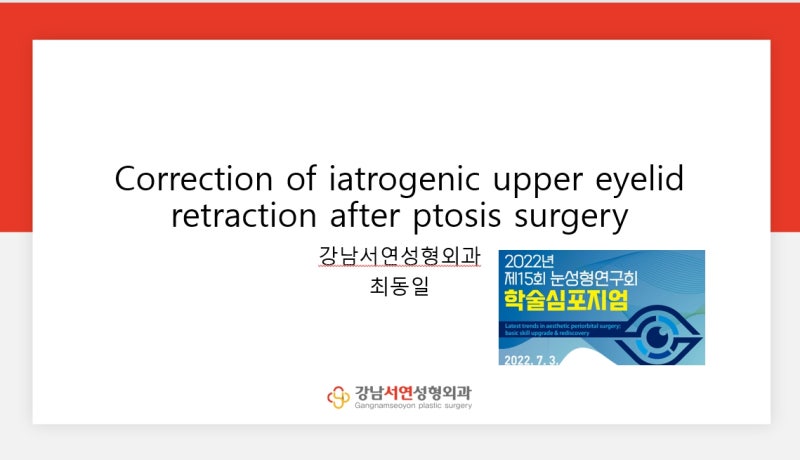
This content is part of the lecture I will present at the 15th Ophthalmic Plastic Surgery Research Group Academic Symposium on July 3, 2022.
I hope this information is helpful to fellow plastic surgery specialists.
Frequently Asked Questions
What is eyelid retraction?
Eyelid retraction refers to the phenomenon where the eyes are excessively open, often due to overcorrection from ptosis surgery, making them appear startled. To correct this, instead of retracting the eye-opening muscle, a retraction correction surgery is performed to lower the excessively raised eyelid to a normal position.
Can overcorrection be resolved by simply removing the ptosis correction sutures?
No, simply removing the sutures does not correct a retracted eyelid. It is absolutely necessary to meticulously separate the eye-opening muscle (levator palpebrae) from the tarsal plate, and to separate the Müller's muscle and conjunctiva to precisely release adhesions.
What should I do if my eyes become larger again after surgery?
If your eyes become larger again within 2-3 weeks after surgery, you must undergo early correction. Eyelid retraction correction surgery has a relatively higher chance of requiring early correction compared to other surgeries, so it is best to visit the hospital immediately if symptoms appear.
If I develop asymmetrical eyes after surgery, can I have revision surgery immediately?
No, in cases of asymmetry, there are many variables in the recovery process, so revision correction is performed after 6 months. Retraction correction surgery has a relatively higher possibility of developing asymmetry, but you don't need to worry too much as it can be safely corrected after a sufficient recovery period.