2026-05-29
Botox Treatment for Facial Paralysis and Bell’s Palsy
Learn how Botox can help restore facial symmetry after Bell’s Palsy by treating muscle spasms and synkinesis during the recovery phase.
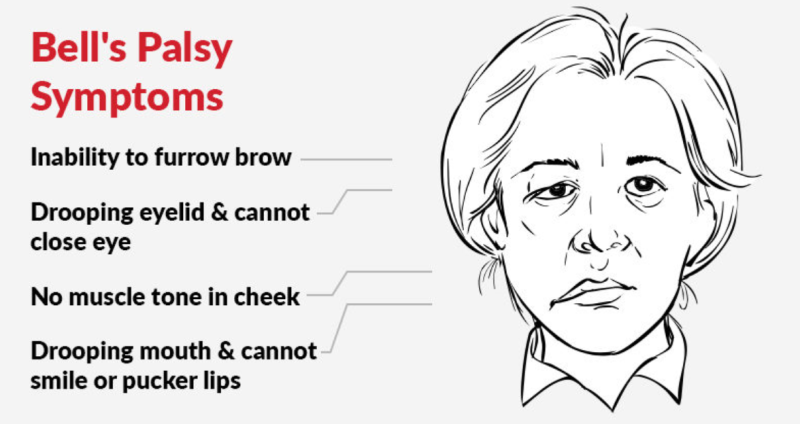
You may have heard this saying when you were younger.
If you sleep on a cold floor, you might get ‘facial paralysis’ or ‘Guanwasa’ (a twisted mouth).
The accurate clinical term for this condition is Bell’s palsy.
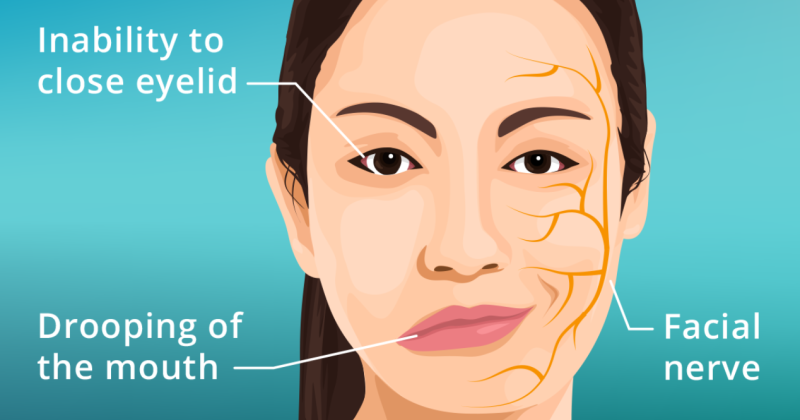
As shown in the illustration above, the facial nerve branches into five paths. Although only four are visible in the diagram, there is an additional nerve that extends toward the neck.
When paralysis occurs, as seen on the right side of the face in the image, the corner of the mouth appears to droop, there is difficulty closing the eye, and the forehead cannot be lifted.
While most cases improve naturally, there are instances where recovery is incomplete following total paralysis, or where the nerves become overactive, leading to synkinesis (involuntary muscle movements).
In such cases, ‘Botox’ treatments can be used to restore symmetry and create a more balanced appearance.
The treatment involves using low-dose Botox on the side that has recovered from paralysis, specifically targeting areas where the muscles are pulling too strongly.
The progress is recorded in the patient’s chart, and the dosage is gradually adjusted through consultation to find the optimal balance.
Patients typically visit every 3 to 6 months to manage and maintain the results.
Frequently Asked Questions
What are the main symptoms of facial paralysis (Bell's palsy)?
The main symptoms include a drooping corner of the mouth, difficulty closing the eye, and inability to raise the forehead. These asymmetrical symptoms appear on one side of the face due to paralysis of the facial nerve.
Is Botox treatment possible for sequelae of facial paralysis?
Yes, it is possible. When facial asymmetry remains after recovery from paralysis or when nerves react excessively, low-dose Botox can be injected to help balance the symmetry of both sides of the face.
Which areas of the face are treated with Botox?
Botox is primarily injected into the muscles on the side that was paralyzed and has recovered. Specifically, it is administered in low doses to areas where muscles contract abnormally strongly or where synkinesis occurs after recovery, to adjust symmetry.
What is the interval for Botox treatment?
Treatment is typically received every 3 to 6 months. The patient's condition is carefully recorded in their chart, and in consultation with medical staff, the Botox dosage is gradually adjusted for a customized treatment plan.