2026-05-29
Improving Multiple Creases in Double Eyelids (feat. Multiple Creases After Double Eyelid Revision Surgery)
This post discusses improving multiple creases in double eyelids, especially after revision surgery, covering causes like adhesions, volume deficiency, and muscle damage, and the importance of proper surgical technique and patient patience.
Improving Multiple Creases in Double Eyelids (feat. Multiple Creases After Double Eyelid Revision Surgery)
This post is about improving multiple creases in double eyelids.
This patient was referred to our clinic by another hospital director, who suggested they come here.
The doctor from the other hospital responsibly referred the patient to us. Everyone has their own area of expertise, and we are grateful for the referral. We promised the patient that we would do our best for them.
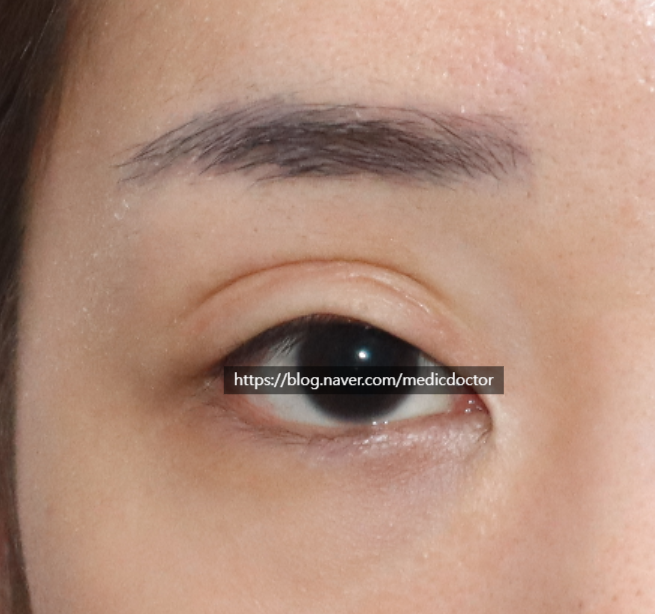
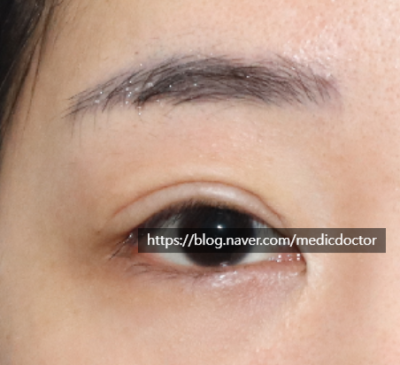
There is no volume on the eyelid, and multiple creases are folded.
In such cases, there are various causes:
The first is specific adhesion. If there is damage between tissues or unwanted adhesion occurs, that area will become depressed, leading to multiple creases.
The second is insufficient volume. This can happen if too much tissue has been removed from the upper eyelid, or if there is a congenital lack of fat, or if the orbicularis oculi muscle is thin.
In such cases, multiple creases can occur.
The third is damage to the levator muscle. In such cases, adhesion with the damaged part of the levator muscle can cause this.
Surgery is performed accordingly.
The principle of surgery is to thoroughly release adhesions and prevent them from reoccurring.
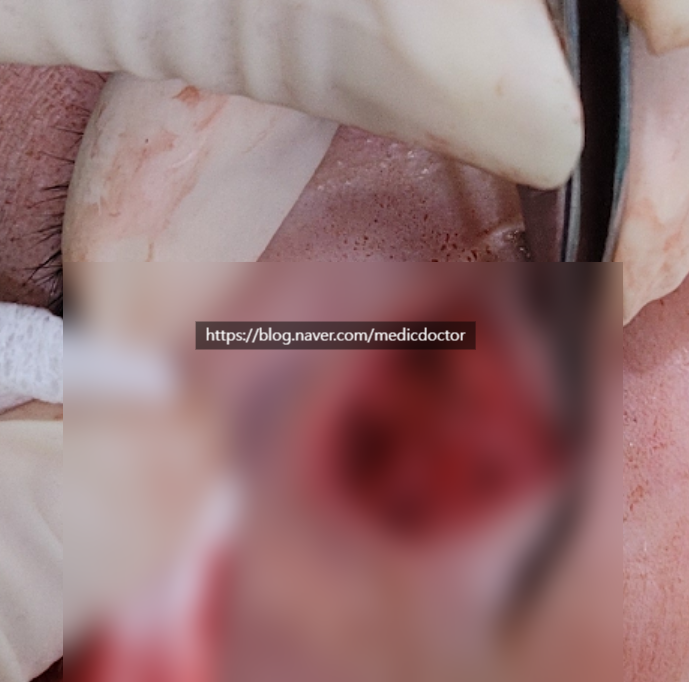
In this patient's case, there was adhesion due to revision surgery and slight damage to a part of the levator muscle.
There was no problem with opening the eyes, but adhesions and multiple creases could easily occur.
Also, the double eyelid crease could easily loosen.
The success of the surgery can be known immediately after the operation.
Immediately after surgery, multiple creases should not form. There are two reasons for multiple creases immediately after surgery: the first is that the adhesion was not sufficiently dissected.
The second is that there is no swelling, meaning there is no volume in the upper part of the eye. This is a rare case, and it is judged empirically.
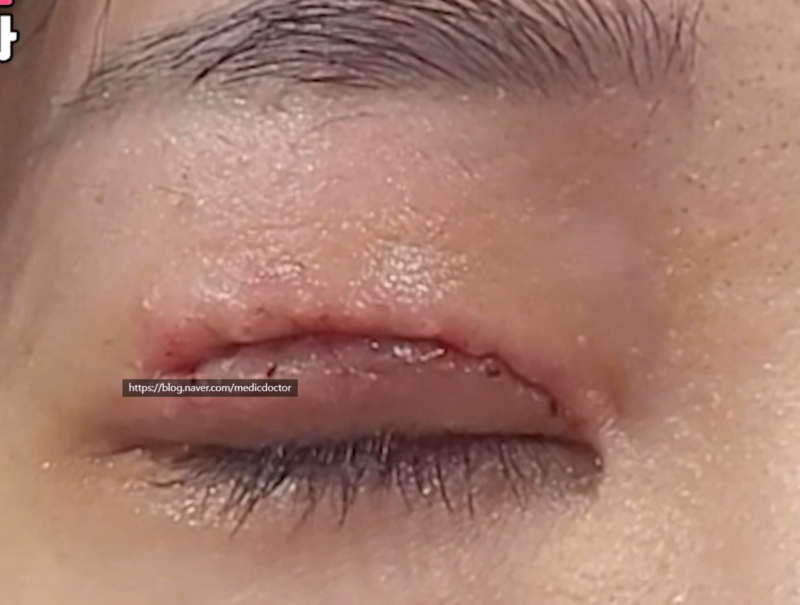
If you watch the video, you will see how it looks when the stitches are removed. Do you see an extra line folded above the double eyelid crease?
In such cases, patients can become very anxious. ‘Is something wrong again? Was the surgery done incorrectly?’
Let me first explain the cause of this.
After surgery, the swelling below the incision line lasts longer than the swelling above.
In other words, the upper swelling subsides first, making the area below the incision line relatively harder.
Then, when it folds, it presses down on the upper part, causing it to fold.
In such cases, it improves over time, but only the surgeon knows this. If it is determined that fat repositioning and fat grafting were perfectly done during surgery, then one must wait. Patients should not be anxious.
However, early revision surgery is necessary in the following cases: if there is almost no feeling of folding at the double eyelid incision line and only the area above folds, early correction is needed. Please refer to the blog below:
Early Correction of Double Eyelid Surgery, Early Revision Cases: Naver Blog (naver.com)
I asked this patient to wait, and I will show you how they looked at their 2-month follow-up visit.
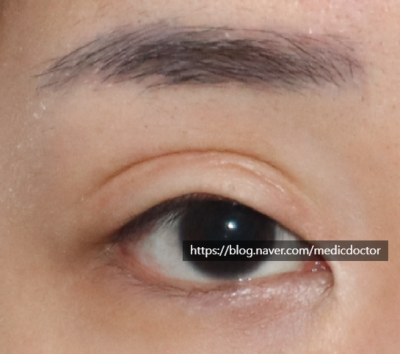
Looking closely, you can see that it has improved significantly compared to before.
This is how it looks at 6 months.
The multiple creases have disappeared.
In cases of stubborn multiple double eyelid creases, various techniques must be employed to prevent them, and patients must know how to wait. Sometimes, even after revision surgery, if results don't appear immediately, patients can feel overwhelmed, but by trusting your doctor and following instructions, good results are likely to be achieved.
However, if early correction is necessary, you should discuss it with your doctor and proceed immediately.
Patients cannot make this judgment themselves, so you must consult with an expert. If you are not an expert, you will not be able to determine whether early correction is needed or if it can be left alone. This is because you could miss the golden time.
Frequently Asked Questions
What causes multiple folds to form after double eyelid surgery?
There are three main causes. First, unwanted adhesions due to tissue damage; second, volume loss due to lack of fat or tissue in the eyelid; and third, damage and adhesions of the muscle that opens the eye. It is important to identify the exact cause.
What are the core principles of revision surgery to improve multiple folds?
The core principle is to reliably release adhesions and prevent them from re-forming. Depending on the cause, fat repositioning or fat grafting may be performed concurrently to fill the insufficient volume of the eyelid, and the multiple folds are corrected immediately after surgery to prevent them from forming.
If multiple folds reappear when the stitches are removed, does that mean the surgery was unsuccessful?
No, it may be a temporary phenomenon. This can occur because the swelling below the incision line lasts longer and becomes relatively harder than the upper part, pressing down on it. If the fat was well-positioned during surgery, it will naturally improve over time.
When is early correction needed after double eyelid revision surgery?
Early correction is needed when there is almost no feeling of folding along the double eyelid incision line, and it only folds along the upper line. In this case, you must immediately consult with the specialist who performed the surgery to decide whether to undergo revision surgery, so as not to miss the golden time.