2026-05-29
Double Eyelid Scar Revision Surgery: How Do You Measure the Outcome?
A plastic surgeon explains the realities of double eyelid scar revision, the difficulty of quantifying improvement by percentages, and why first-time surgeries yield better results.
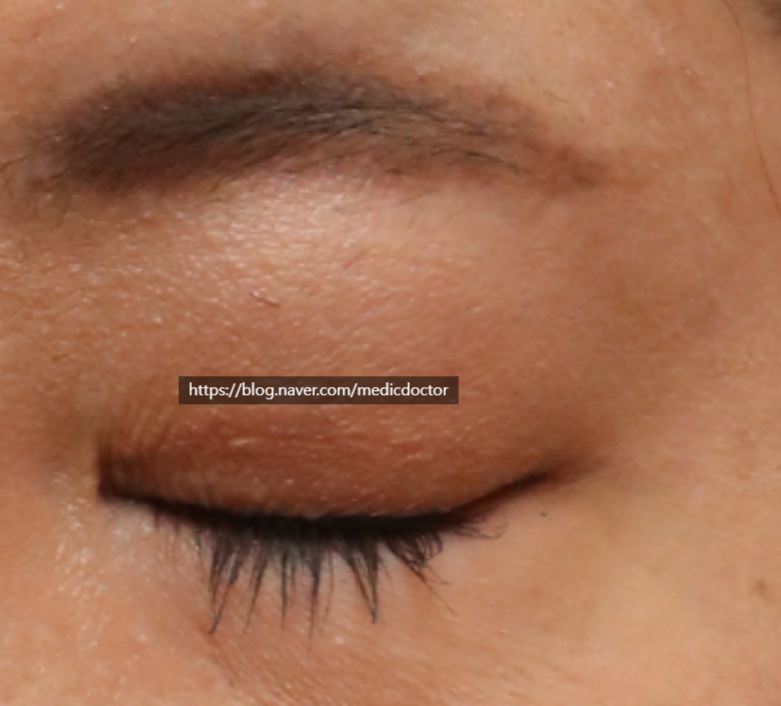
Measuring the Extent of Double Eyelid Scar Revision Surgery (?)
Lately, during consultations, many patients come to me expressing significant stress over scars from previous double eyelid surgeries.
Inevitably, any procedure involving an incision with a scalpel will result in a scar. Unless the incision is made on a mucous membrane, scarring is a natural part of the healing process.
However, there are certainly ways to minimize scarring. This is most achievable during the primary (first) surgery.
By minimizing tissue damage and cutting as little tissue as possible, scars can be reduced; however, this approach may increase the risk of the double eyelid fold loosening.
The key is finding the right balance between the two.
‘Does incisional ptosis correction leave a lot of scarring?’ : Naver Blog (naver.com)
This is a blog post I wrote about five years ago.
While primary surgery can be managed to this extent, revision surgery is a completely different matter.
In revision cases, we must clean up the surrounding scar tissue, bring in as much healthy surrounding tissue as possible to smooth out the area, and perform layering or padding work.
We put in a great deal of effort to make the area look clean.
The keyword here is ‘effort.’ There is no absolute guarantee that the scar will improve.
This is because once we actually open the eyelid, if there is no healthy surrounding tissue or no tissue available for padding, improvement simply cannot be achieved.
Imagine if, in the middle of surgery, I had to tell a patient that the scar couldn’t be improved for these reasons...
Think of how disappointed the patient would be.
That is why I do not perform surgery solely for the purpose of scar improvement.
Of course, as mentioned in my previous blog post, I have extensive know-how in minimizing scars during primary surgery and various techniques to make scars less visible.
But if the necessary ‘material’ (tissue) isn’t there, there is no way around it. Occasionally, patients ask me, ‘By what percentage can you improve the scar?’
They tell me other clinics claimed they could achieve a 60% or 70% improvement.
But I wonder: can scar improvement really be expressed as a percentage? If the scar isn’t visible, it’s nearly 100%; if it remains, is it 0%?
If a surgeon claims a 60% improvement, but the patient only feels a 10% difference, how do we bridge that 50% gap in perception?
Is it just a matter of stubborn insistence?
In most revision cases, I inform patients that the scar may not improve. However, I do my absolute best to make it less noticeable. I believe many patients are quite satisfied with the post-operative scar results shown on our blog and YouTube channel.
‘Progress of Double-Line Folding (Dujul-ttagi) Scars (1-year follow-up)’ : Naver Blog (naver.com)
Specifically, in the case of ‘double-line folding’ (Dujul-ttagi), a scar where two lines meet is created, but this also tends to improve significantly over time.
‘Let’s look at a case of double-line folding surgery’ : Naver Blog (naver.com)
‘Asymmetric eye correction review - Understanding the principles - Price is important..’ : Naver Blog (naver.com)
This is why the likelihood of minimal scarring is naturally higher during the first surgery.
I will utilize every method I know to ensure that scarring is minimized as much as possible.
However, I do not offer guarantees!
Frequently Asked Questions
Can I avoid leaving scars during my first double eyelid surgery?
Yes, it is possible to minimize them. Scars naturally occur with any incision, but they can be reduced by performing surgery in a way that minimizes tissue damage and involves less cutting. However, it's important to balance this with the possibility of the double eyelid loosening.
Can double eyelid revision surgery completely remove existing scars?
No, complete scar improvement cannot be guaranteed. During revision surgery, scar tissue around the area is tidied up and normal tissue is brought in to cover it, but if there isn't enough normal tissue to use once the area is opened, the scar may not improve.
Should I undergo double eyelid revision surgery solely for scar improvement?
No, surgery solely for scar improvement is not recommended. If normal tissue is insufficient during surgery and the scar does not improve, the patient may experience significant disappointment, so it is best not to proceed with surgery just for scar improvement.
Other clinics say scars improve by 70%. Is that true?
No, it is almost impossible to accurately quantify the degree of scar improvement with a percentage (%). If a scar is invisible, it's 100%, and if it remains, it's closer to 0%, so even if a doctor claims 70% improvement, there can be a significant difference from the patient's subjective satisfaction.
Are scars from the 'two-line incision' surgery permanent?
No, they tend to gradually improve over time. Due to the nature of the two-line incision surgery, scars may initially appear as two lines, but with sufficient time and observation, they often fade and improve naturally.