2026-09-10
Early Revision for Incisional Double Eyelid Surgery: Necessary Cases and Clinical Approaches
Early revision for incisional double eyelid surgery addresses adhesion issues, asymmetry, and ptosis correction imbalances, typically evaluated within 1 to 3 weeks post-op.
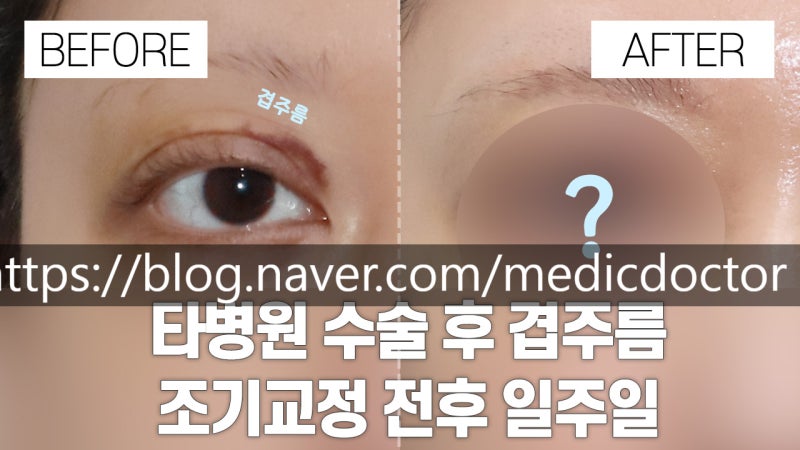
Even after incisional double eyelid surgery, early revision may be required due to abnormal adhesions, left-right asymmetry, or irregular crease lines. Because the incisional method involves tissue excision and natural adhesion processes, the timing and surgical technique for revision must be evaluated with great care.
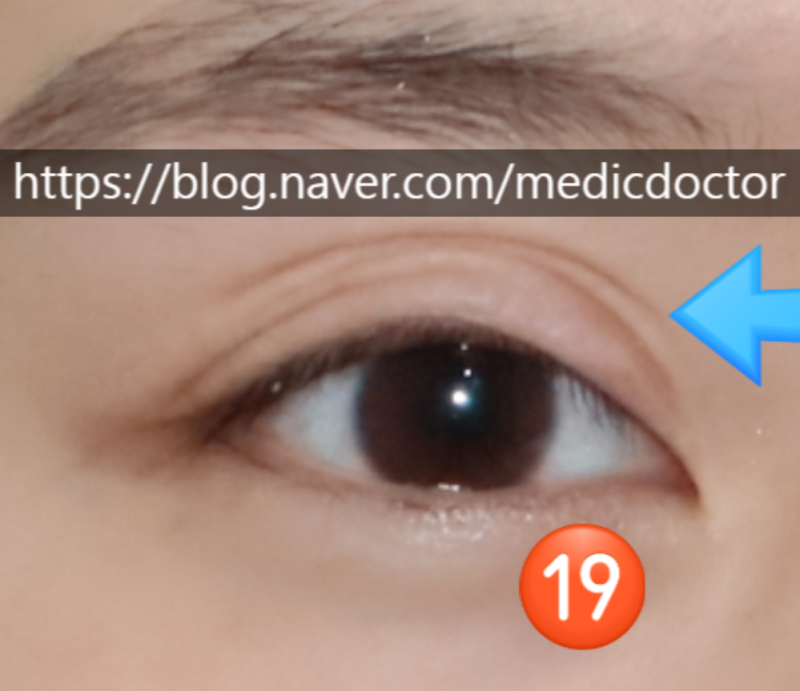
Early revision for incisional double eyelid surgery refers to performing a corrective procedure relatively soon after the initial incisional blepharoplasty when issues such as abnormal adhesions, uneven crease lines, or asymmetry between the eyes occur. Unlike non-incisional (suture) methods, the incisional approach involves excising and suturing skin and underlying tissues, meaning both the underlying causes that necessitate early correction and the clinical approaches differ significantly.
■ Typical Situations Requiring Early Incisional Revision
- When adhesion along the incision site develops excessively or unevenly, resulting in an unnatural fold
- When clear asymmetry is noticeable in line height, width, or shape between both eyes
- When ptosis correction was performed concurrently and the eye-opening power or sagging differs from expectations
When ptosis correction is overcorrected or under-corrected
Because incisional procedures typically induce more swelling and tissue response immediately after surgery than non-incisional techniques, it is difficult to determine whether early revision is necessary based solely on initial unnatural creases. Generally, it is advised to wait until the tissues stabilize and scar tissue as well as adhesions settle before assessing the final outcome.
■ Key Factors to Re-evaluate for Early Incisional Revision
When considering an early revision of incisional double eyelid surgery, the following factors are comprehensively assessed:
- Adhesion status: Whether areas of excessive and insufficient adhesions coexist
- Amount of skin excised: Whether the initial amount of skin removed was excessive or insufficient
- Concurrent ptosis correction: If ptosis correction was performed, the status of the muscle and aponeurosis manipulation
- Alignment between scar positioning and the desired crease line
Because these elements are often difficult to evaluate solely through surface observation of the line, a thorough review of the initial surgical records along with the current tissue condition is required.
During early revision, the surgical site is often directly reopened to inspect and evaluate underlying abnormalities.
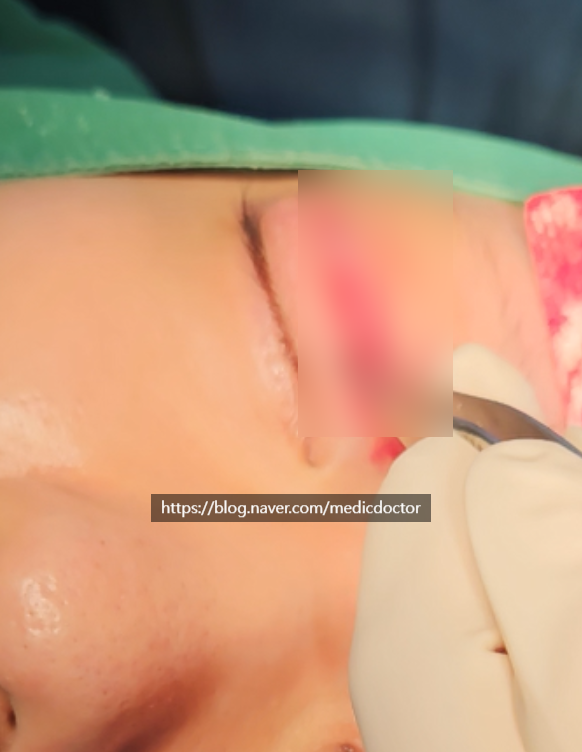
■ How to Determine the Timing for Early Incisional Revision
Because incisional surgery involves tissue excision and closure, it generally requires more time for adhesions to settle compared to non-incisional methods. However, it is ideal to conduct an evaluation once major swelling has subsided. It is generally recommended to assess the eyelids between 1 and 3 weeks postoperatively, after major swelling has sufficiently stabilized. Nevertheless, exceptional cases presenting with signs of infection, severe left-right asymmetry, or functional eyelid impairment may warrant urgent early intervention.
■ Checklist Before Undergoing Early Incisional Revision
1. Review the extent of excision, adhesion method, and whether ptosis correction was performed during the initial surgery
2. Distinguish whether the problem stems from the line itself or is related to eyelid shape and functional dynamics
3. Consult regarding the necessity of re-incision and the specific approach tailored to current tissue conditions
4. Receive detailed guidance on scar management and expected recovery timelines
Because early incisional revision involves re-manipulating delicate tissues compared to non-incisional surgery, consultation with a skilled medical specialist who can meticulously evaluate both the initial surgical history and current anatomical conditions is vital.
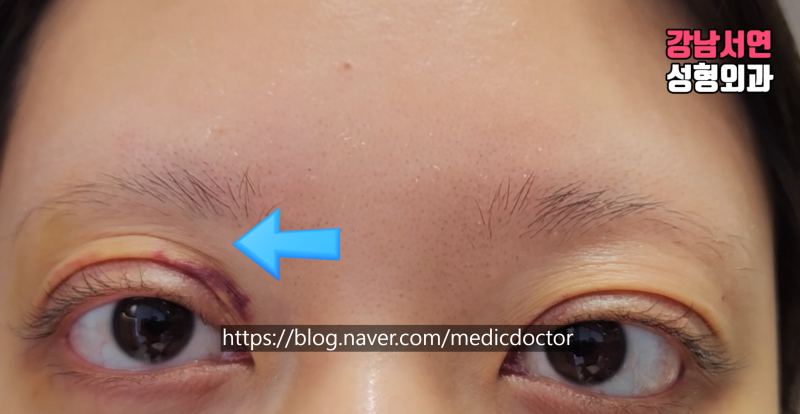
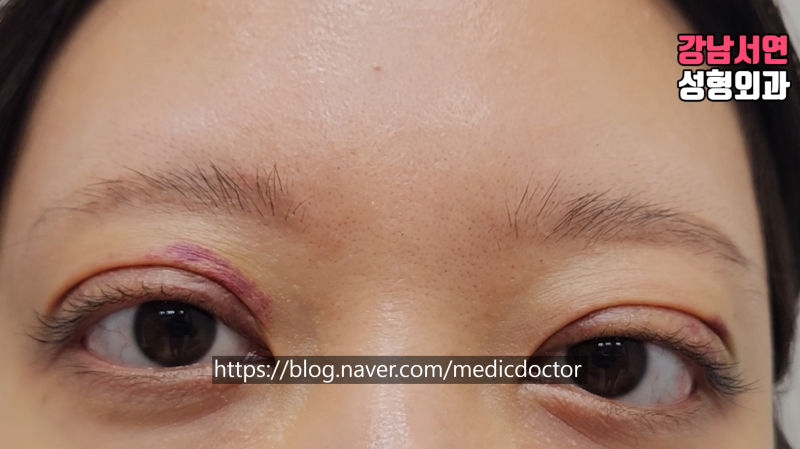
Postoperative outcome
Q1. How soon after surgery can early incisional revision be performed?
A. Although incisional blepharoplasty takes time for tissues to stabilize, decisions regarding early revision are usually made within 1 to 3 weeks postoperatively.
Q2. Can I undergo revision surgery immediately if I am unhappy with my incisional crease?
A. Crease lines can shift depending on post-surgical swelling and initial adhesion formation. Therefore, it is best to confirm whether the issue persists after the tissues have sufficiently stabilized before deciding on surgery.
Q3. Does the early revision approach differ between incisional and non-incisional methods?
A. Yes, it differs. While non-incisional issues often stem from suture loosening or lack of adhesion, incisional revisions require comprehensive assessment of irregular adhesions, amount of excised skin, and concurrent ptosis correction.
Q4. Can scars also be addressed during early incisional revision?
A. Surgical plans often incorporate the alignment between the scar and the new line as well as scar quality; the precise approach depends on each patient's individual condition.
https://youtu.be/g3j1qKSCsI8
#EarlyIncisionalRevision #DoubleEyelidRevision #IncisionalAdhesion #EyelidRevision #GangnamBlepharoplasty
Frequently Asked Questions
When is the right time for early revision of incisional double eyelid surgery?
The decision for early revision is typically made between 1 to 3 weeks post-surgery. Because swelling and tissue responses are more pronounced in incisional procedures, it is recommended to evaluate the condition after major swelling has adequately stabilized.
Can I have revision surgery immediately if I dislike my crease right after surgery?
Rather than proceeding immediately, it is advisable to wait until tissues have adequately stabilized. The eyelid line can change significantly as early swelling subsides and initial adhesions mature, making observation necessary to see if the issue persists.
What are the typical indications for early incisional revision?
Typical signs include adhesion irregularities, pronounced asymmetry, and either overcorrection or under-correction of ptosis. Early revision is considered when uneven adhesions make the line unnatural or when functional eyelid problems arise.
How does early revision differ between incisional and non-incisional double eyelid surgery?
There is a substantial difference in both procedural approach and root-cause analysis. Non-incisional issues are primarily related to sutures, whereas incisional procedures require holistic evaluation of tissue excision, adhesion balance, and aponeurosis status from ptosis correction.