2026-05-29
Nanofat Grafting Survival Rate (feat. Upper and Lower Eyelid Fat)
Learn about nanofat grafting for hollow eyes. Discover the differences between microfat and nanofat, the procedure process, and how it improves survival rates.
Nanofat Grafting Survival Rate
Let’s take a closer look at the survival rate of nanofat grafting.
When there is hollowed-out skin above the eyelids or under the eyes, fat grafting is often performed to restore lost volume.
In such cases, you can choose between standard fat grafting, microfat grafting, or nanofat grafting.
- Standard Fat Grafting: Clusters of fat cells ranging from several hundred μm to several mm in size.
- Microfat Grafting: Fat particles approximately 400–600 μm in size.
- Nanofat Grafting: A liquid form of fat where cell membranes are broken down, primarily consisting of stem cells and growth factors; fat particles are microscopic.
These are the primary differences.
When injecting fat into the upper eyelids, standard fat can sometimes result in lumps or be felt under the skin. To minimize these issues, nanofat grafting is used.
Because nanofat is almost liquid in consistency, it is excellent for creating smooth, natural shapes.
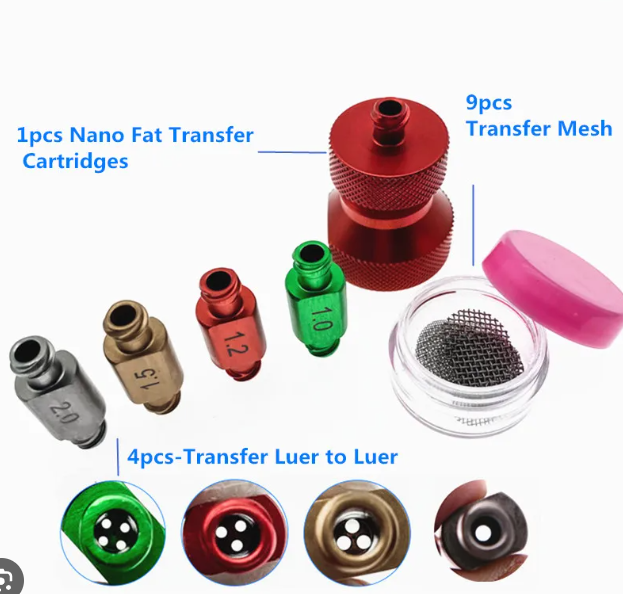
Extraction is performed using specialized tools. This may involve mesh-type filters or commercial products like the Adinizer.
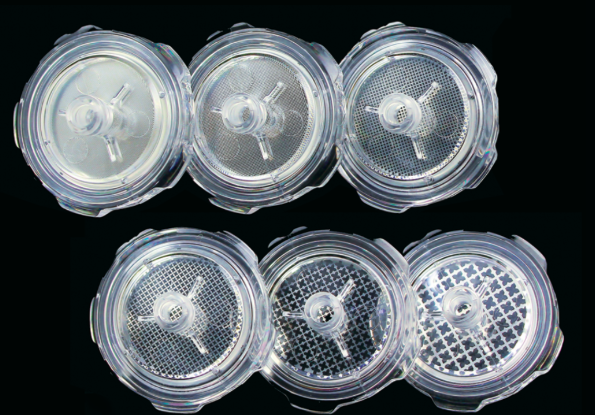
These types of devices are commonly utilized.
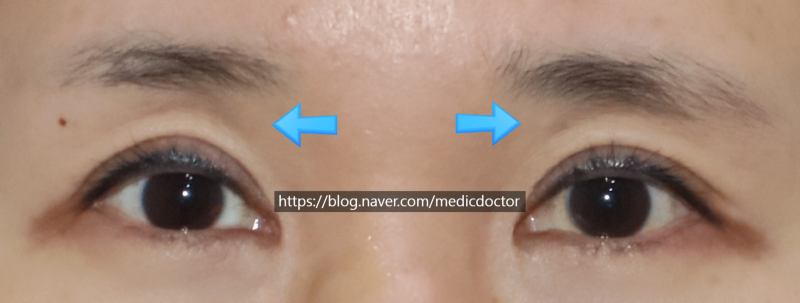
Post-operative appearance
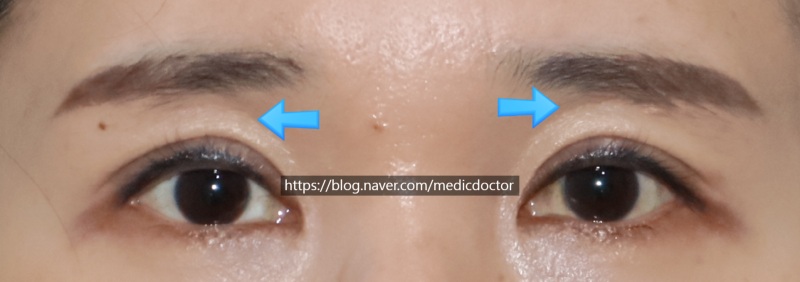
The injection is performed in this manner.
Fat is typically extracted from the thighs or abdomen and then injected into the upper eyelid area.
The surgery time is usually within 20 to 30 minutes if only the fat grafting is being performed.
Frequently Asked Questions
How does nano fat grafting differ from regular fat grafting?
Yes, there is a significant difference in particle size and form. Regular fat grafting involves clumps ranging from hundreds of micrometers to several millimeters, whereas nano fat grafting is in a liquid form with disrupted cell membranes. It is primarily composed of stem cells and growth factors, making the particles microscopically small.
Why is nano fat grafting recommended for the eyelid area?
It can minimize clumping in the eyelid area. The skin above and below the eyes is thin, so injecting regular fat carries a risk of clumping or being palpable on the surface. Nano fat is almost like water in liquid form, making it excellent for naturally shaping the area after injection.
Where is the fat used for nano fat grafting harvested from?
It is primarily harvested from the patient's own thighs or abdomen. Fat extracted from the abdomen or thighs is processed into fine nano-sized particles using a dedicated mesh or special devices like an Adinizer, and then injected into the eye area.
How long does nano fat grafting surgery for the eye area take?
The surgery typically takes within 20 to 30 minutes. This applies when only fat is injected into the eye area without other complex procedures, and it is characterized by the procedure being completed in a relatively short time.