2026-05-29
Side Effects of Non-Incisional Ptosis Correction: Cases Where the Suture Method Should Be Avoided
Learn about the side effects of non-incisional ptosis correction and identify specific cases, such as thick skin or severe ptosis, where the suture method is not recommended.
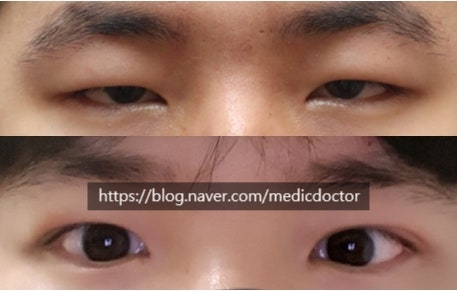
Non-incisional ptosis correction has recently gained significant popularity.
Let’s take a look at its potential side effects and the specific cases where this procedure should be avoided.
There are various terms for the non-incisional method: the suture method, the ‘pinching’ method, the non-incisional technique, the natural adhesion method, and so on.
Ultimately, these all fall under the category of the suture method.
What exactly is the suture method?
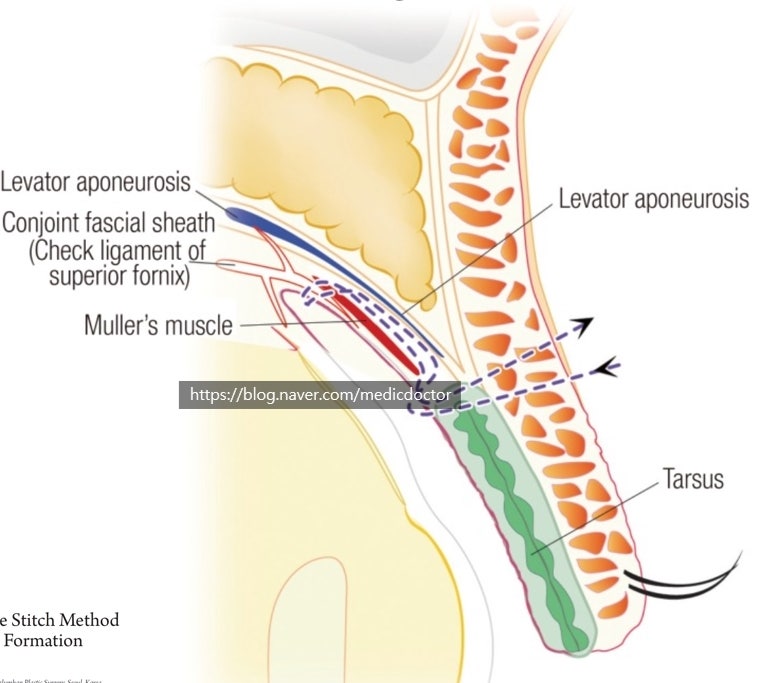
It involves passing a thread through the skin toward the conjunctiva to ‘pinch’ or secure the tissue.
However, there are several cases where this method should not be performed:
1. When the skin is thick – The sutures are likely to come undone.
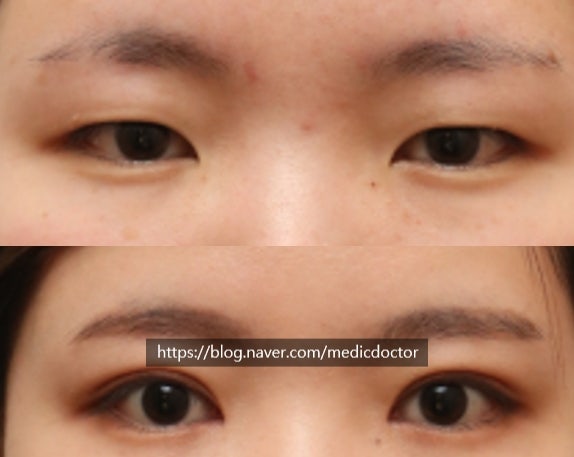
Consequently, the patient above underwent incisional ptosis correction.
2. When there is excessive fat – Again, the sutures are prone to loosening.
Therefore, this patient also opted for incisional ptosis correction.
3. When the eye-opening muscle is weak – Incisional ptosis correction is recommended. This is because tying the tissue excessively using a pinching method can cause significant pain. Generally, an incision allows for uniform anchoring so that the force is distributed; imagine how uncomfortable it would be if the entire weight was pulled by a single point.
For example, when pulling a person, which is more comfortable: pulling the whole body, pulling just the arm, or trying to pull the entire body by a single finger?
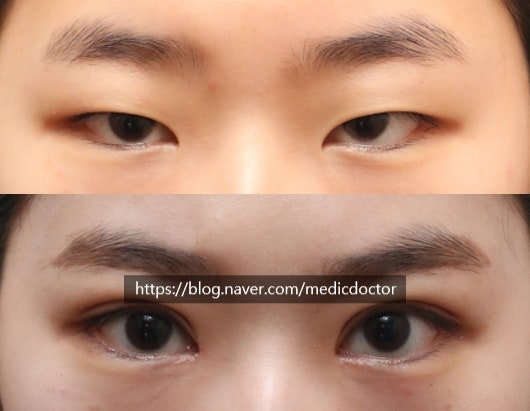
4. When there is skin sagging – The results will be barely noticeable. Eventually, the sagging skin covers everything, making the correction invisible.
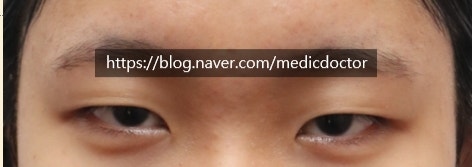
5. When the actual shape of the eye needs to be changed – Proper ptosis correction combined with skin excision is necessary to achieve the desired shape.
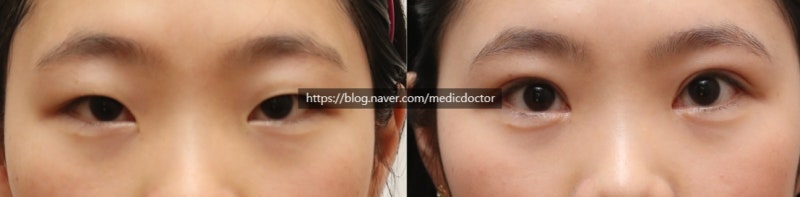
6. When there is severe asymmetry (uneven eyes).
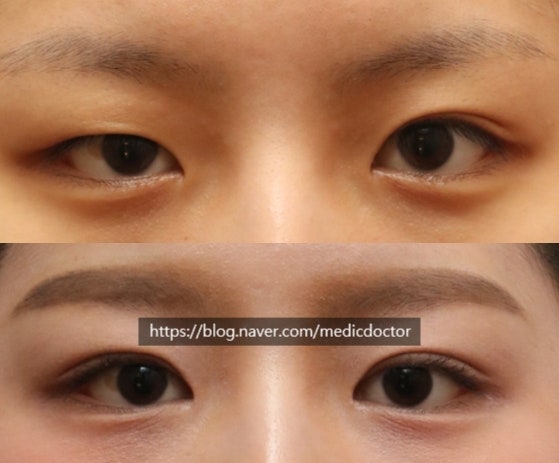
So, what are the ideal cases for the suture method or non-incisional ptosis correction?
1. No skin sagging.
2. Good eye-opening strength with no severe ptosis.
3. Thin skin.
The following is an example of such a case.
Frequently Asked Questions
Are non-incisional ptosis correction and buried suture method different surgeries?
No, they are basically surgeries based on the same principle. They are called by various terms such as buried suture method, pinching method, non-incisional method, and natural adhesion method, but ultimately they all fall under the buried suture method, which involves passing the skin through the conjunctiva and pinching it.
Is non-incisional ptosis correction possible even if I have a lot of fat in my eyelids and thick skin?
No, incisional ptosis correction is recommended. If surgery is performed using a non-incisional method (buried suture method) when the skin is thick or there is a lot of fat in the eyes, the double eyelids can easily loosen.
My ptosis is severe and my eye-opening strength is weak, can I still have the buried suture method?
No, the incisional method is recommended. If the eye-opening strength is weak and you excessively pinch and tie it, the force can concentrate in one place, causing great pain and discomfort, so the force must be evenly distributed by incision.
What are the best eye conditions for non-incisional ptosis correction (buried suture method)?
Eyes with no skin sagging, good eye-opening strength, and thin skin are most suitable. If ptosis is not severe, natural and long-lasting results can be achieved even with a non-incisional method.
What happens if I have non-incisional ptosis correction when I have sagging eyelid skin?
The surgical effect will be barely noticeable. The sagging skin will cover the double eyelid line, making it look as if no surgery was performed, so surgery involving skin excision may be necessary.