2026-05-29
Under-Eye Fat Repositioning Incision and Under-Eye Fat Removal Surgery
An overview of surgical methods for under-eye fat repositioning and removal, focusing on the transconjunctival approach and the role of the tear trough ligament.
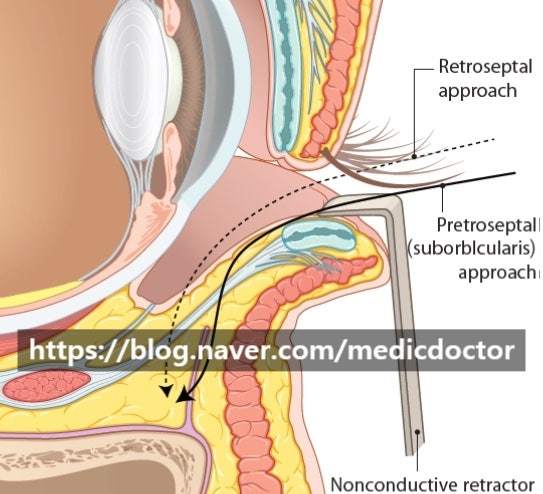
This article covers the incision methods for under-eye fat repositioning and the procedures for under-eye fat removal surgery.
Generally, there are methods involving an external incision and methods performed through the conjunctiva.
The approach is made through the conjunctiva as shown here.
If you look at this patient, there is a hollowed-out area under the eyes, which becomes the target for the surgery.
This area contains a ligament-like structure under the eye called the TTL (tear trough ligament).
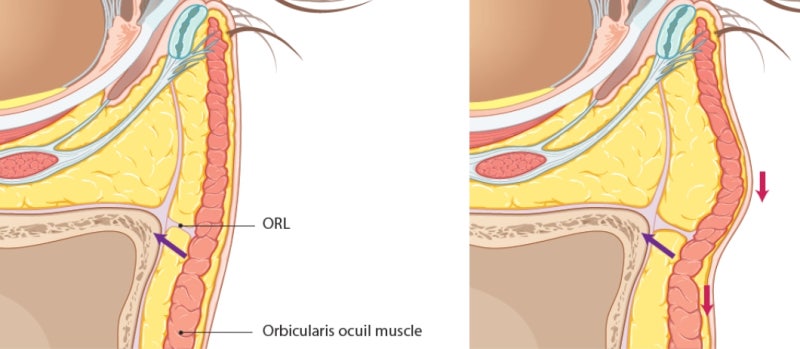
As the fat protrudes and bulges, the TTL remains attached to the bone, creating a visible boundary or ‘groove’.
After partially dissecting and releasing that TTL, the fat is then repositioned.
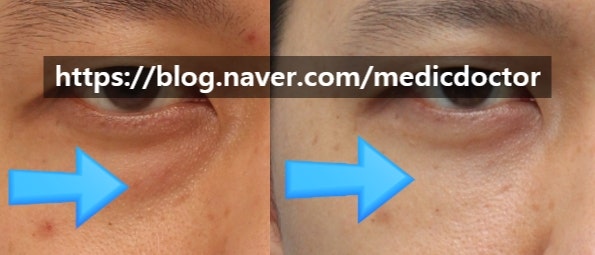
These are photos from 6 months before and after the surgery. The demarcated boundary has disappeared.
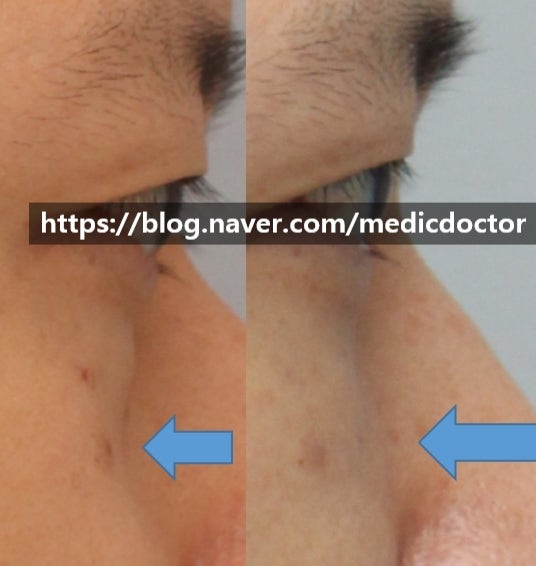
If there is a slight hollowness in the front cheek area, it can be supplemented with procedures such as fat grafting.
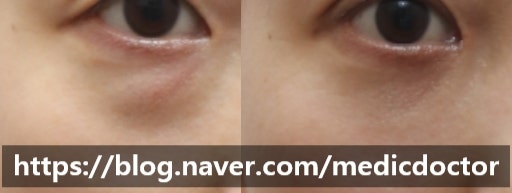
While the boundary line improves, dark circles caused by skin pigmentation will not disappear.
The content here is excerpted from a portion of ‘Aesthetic Plastic Surgery Volume 2’ (Gunja Publishing), in which I participated as a co-author.