2026-05-29
Deep Fixed Buried Suture Removal
This post discusses the removal of deeply fixed buried sutures from double eyelid surgery. While deep fixation is rare, some cases result in a 'pinched' look. We explore when to wait, when to remove sutures, and a case study of a patient who underwent this procedure.

Deep Fixed Buried Suture Removal
I will be posting about this topic.
In reality, the possibility of a buried suture method resulting in deep fixation is extremely rare.
This is because the buried suture method, as the name suggests, involves burying the thread, and once buried, it naturally transitions to a shallow fixation.
However, there are occasional cases where the eyelid appears ‘pinched’. In such instances, if the surgery was performed recently, it is advisable to wait for up to six months.
There is a high probability that the suture will gradually become buried. However, if the eyelid still appears ‘pinched’ even after some time has passed, it is not due to deep fixation but rather because the suture was not properly buried.
In such cases, it is recommended to remove the suture and re-perform the procedure.
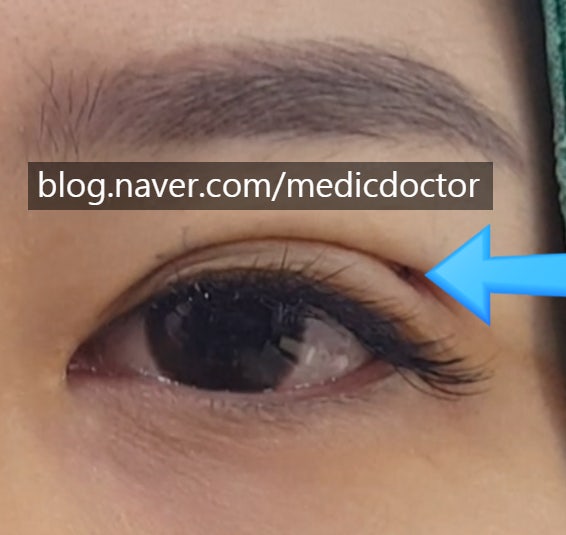
The patient who underwent surgery today complained that the outer corner of her eye appeared ‘pinched’ when she closed her eyes, so we proceeded with the surgery.
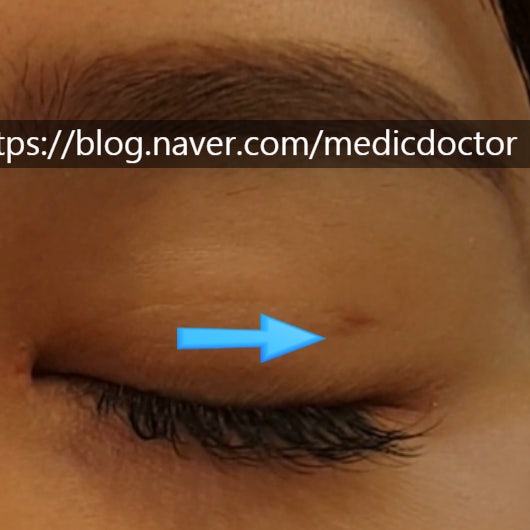
The tip of the area indicated by the arrow is where it appears ‘pinched’.
In this case, it is best to remove the suture and perform the surgery again. However, since it had been a year and a half since the original surgery, removing the suture was not an easy task.
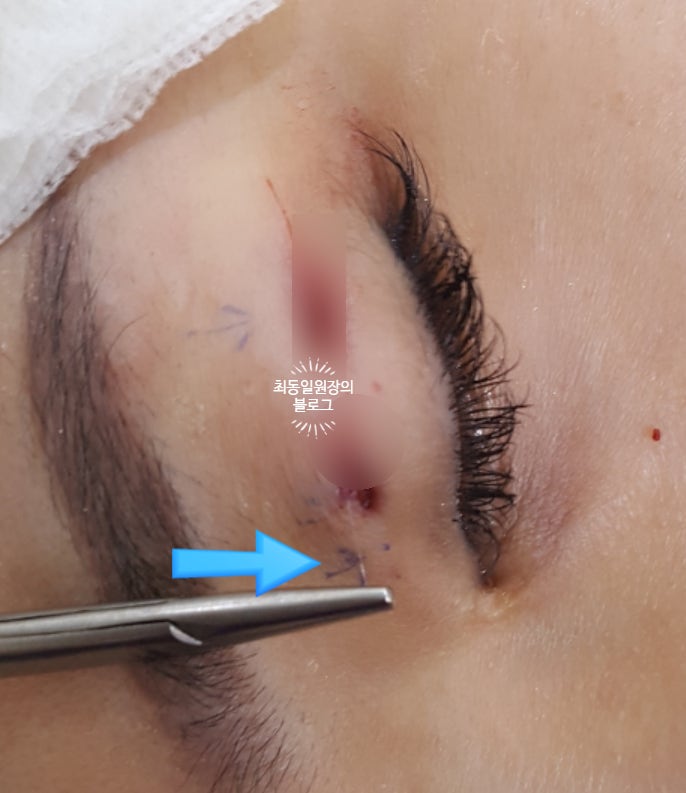
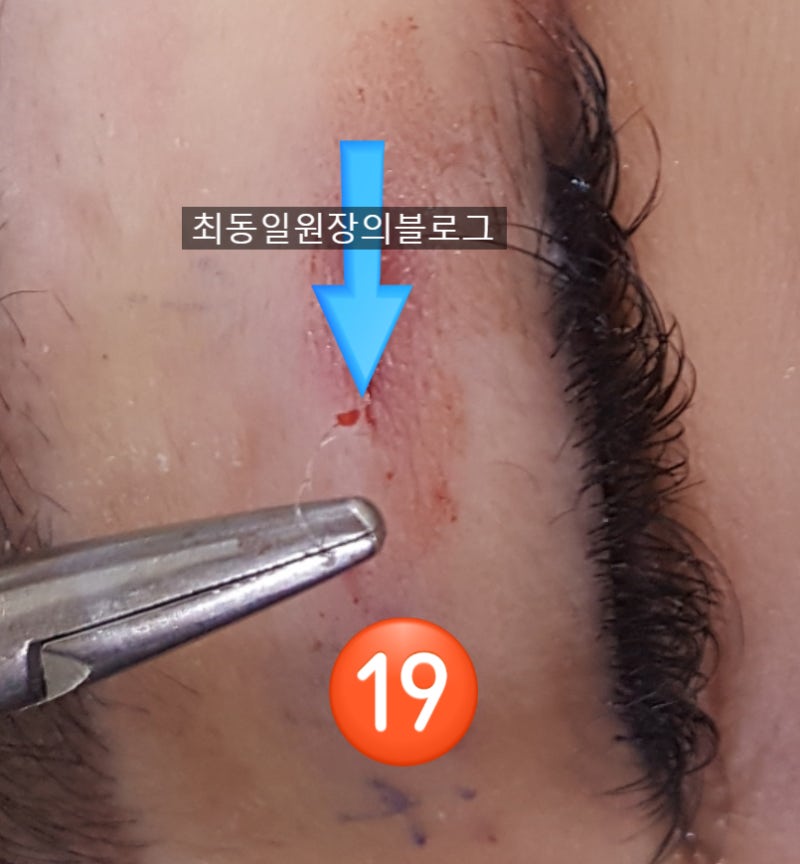
After confirming the sutures in each hole, it appears this patient had double eyelids created with a single-knot continuous method, and ptosis correction in the center.
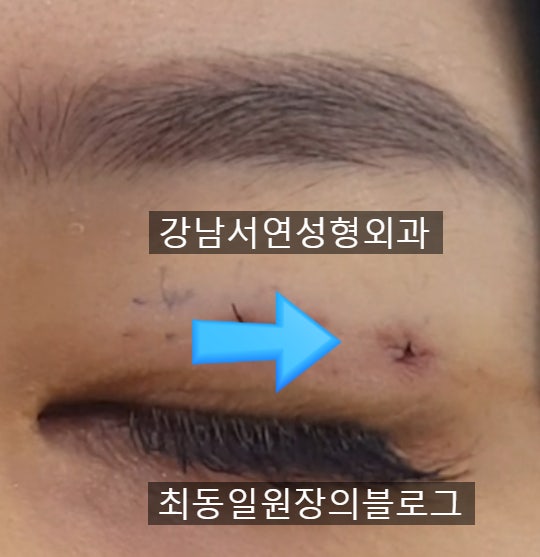
You can see the outer corner has been flattened.
Looking at the before and after photos immediately after the surgery, the right side is the post-operative photo. Even with swelling in the in-out fold, you can see the line has become slightly lower.
This patient originally had double eyelids, so she has returned to her original double eyelid line.
And the outer part was skin-sutured to flatten it, which makes the line appear bent (with the stitches still in place).
She mentioned visiting many hospitals to have the buried sutures removed, but was rejected everywhere, being told only incisional methods were possible. ㅠ
I have removed the sutures for her, and if she wishes to change the shape in the future, an incisional method would be suitable.
Frequently Asked Questions
After non-incisional double eyelid surgery, my eyes look pinched. Should I remove the stitches immediately?
No, if it's early after the surgery, it's recommended to wait up to 6 months. This is because non-incisional methods often allow the stitches to gradually embed under the skin over time, naturally transitioning to a shallower fixation.
What causes the pinched look after 6 months?
It's less about the fixation being too deep and more about the stitches not being properly embedded under the skin. If the pinched mark persists when you close your eyes even after a sufficient amount of time, it's advisable to remove the existing stitches and undergo surgery again.
Is it possible to remove non-incisional stitches even 1.5 years after the surgery?
Yes, it is possible. Although it may be challenging to locate and remove the stitches after a long time, the existing stitches can be accurately identified through each hole and removed without needing to switch to an incisional method.
What happens to the double eyelid line if the non-incisional stitches are removed?
Removing the stitches will restore the patient's original double eyelid line. In the case of the example, even with swelling immediately after stitch removal, the line slightly lowered, restoring the original eye shape.
What should I do if I want to change the shape again after stitch removal?
If you wish to change the double eyelid shape again in the future, it is recommended to undergo surgery using the incisional method. First, the problematic non-incisional stitches can be removed to flatten the area, and then, if necessary, a reoperation with the incisional method can be planned.