2026-06-07
Reducing Side Effects of Incisional Ptosis Correction
Dr. Choi of Gangnam Seoyeon Plastic Surgery shares insights from his lecture at the 13th Academic Symposium on safe approaches to incisional ptosis surgery.
Reducing Side Effects of Incisional Ptosis Correction
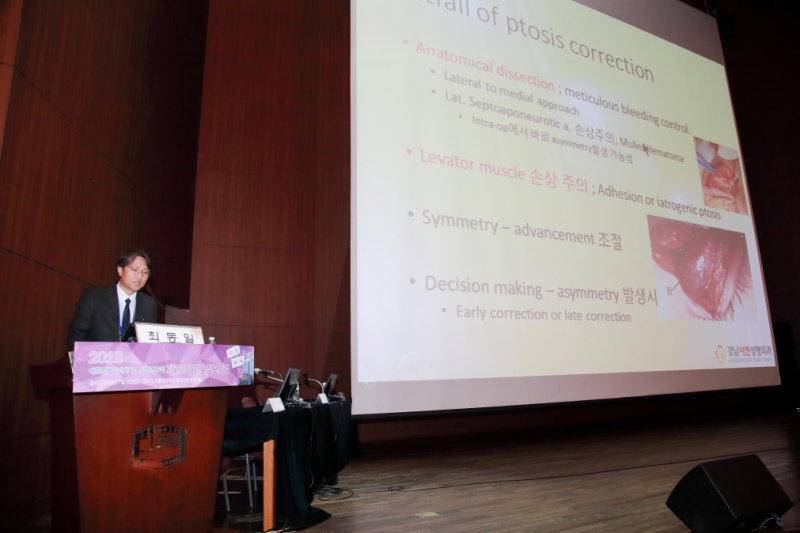
On July 8, 2018, I gave a presentation at the 13th Academic Symposium hosted by the Ophthalmic Plastic Surgery Research Group on the topic of ‘Safe approach of Incisional ptosis surgery – Performing incisional ptosis correction safely’.
Incisional ptosis correction is a procedure that always carries risks. In cases where the surgeon lacks experience, it can result in significant asymmetry, and if the levator muscle is damaged during dissection, it can lead to irreversible consequences.
Therefore, I focused my presentation on safe approach methods for young plastic surgeons who are just starting out.
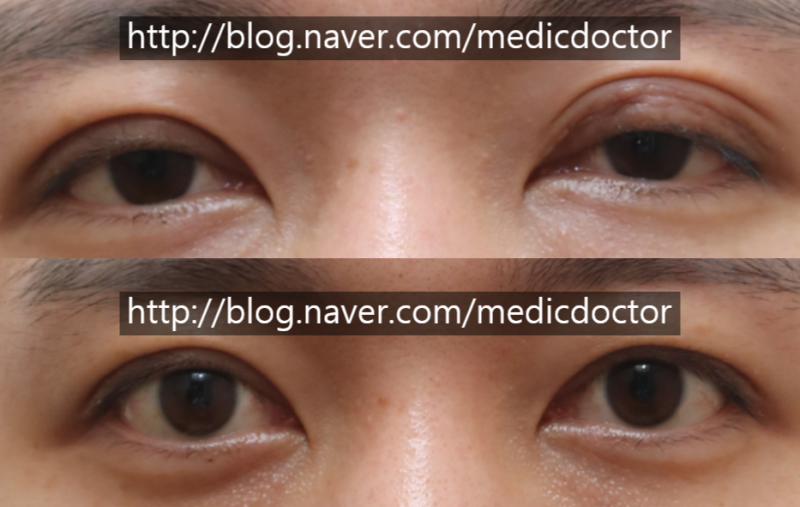
The patient shown above visited 14 days after undergoing ptosis correction elsewhere. When damage occurs during dissection, the double eyelid fold may fail to form, and problems arise when opening the eye, leading to adhesions in the upper area.
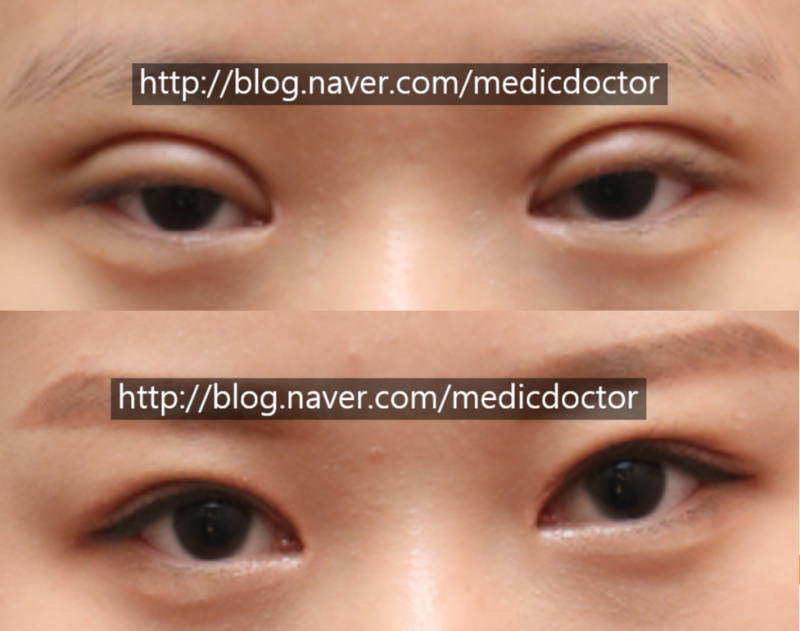
This patient also came to see me about a month after surgery at another clinic. Looking at the pre-revision photos, there is a feeling of the eye being ‘stuck’ when opening, making it difficult to open fully and resulting in a ‘sausage’ double eyelid appearance.
Therefore, safe dissection is of utmost importance.
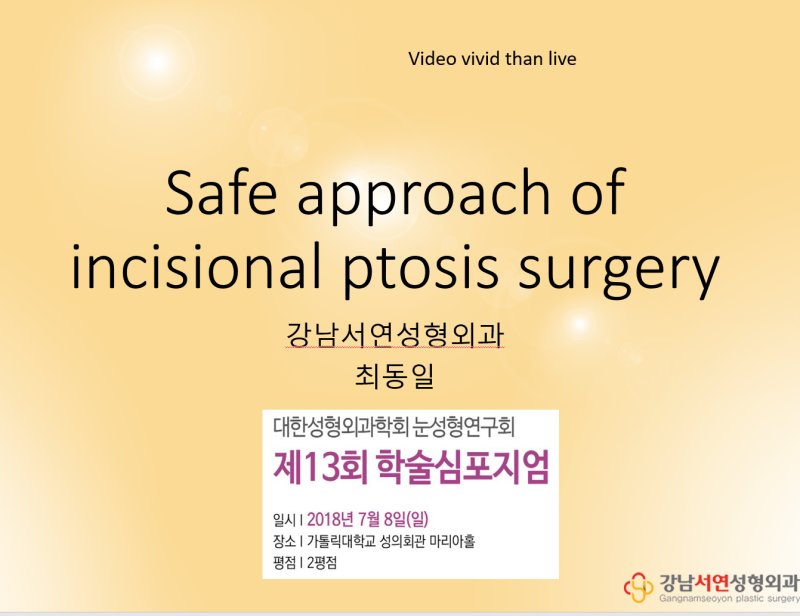
This is the title slide from that presentation.
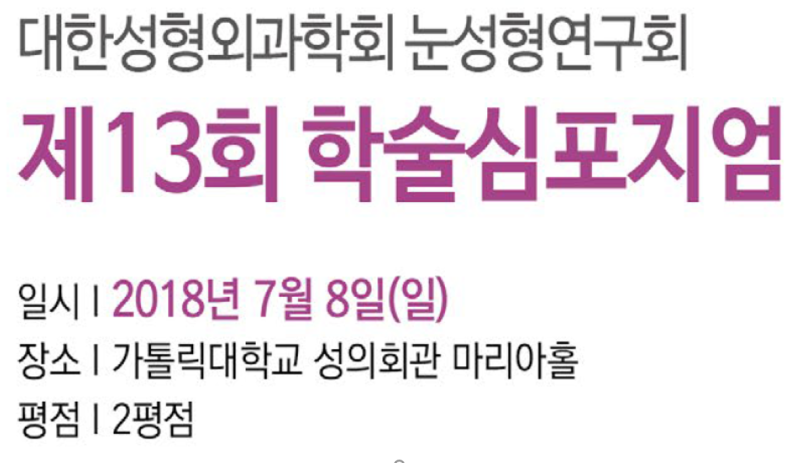
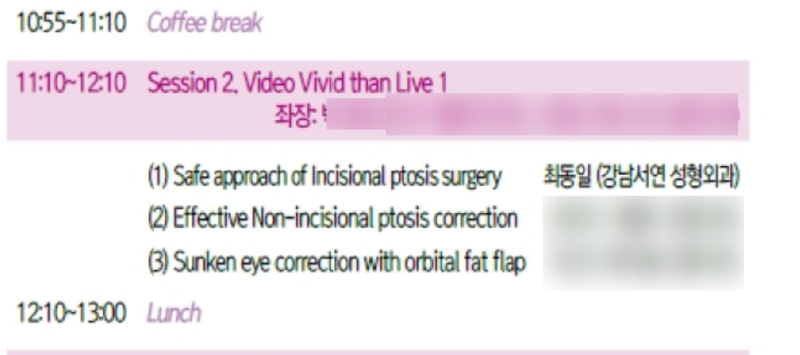
The schedule was as follows:
Presentation right before lunch.
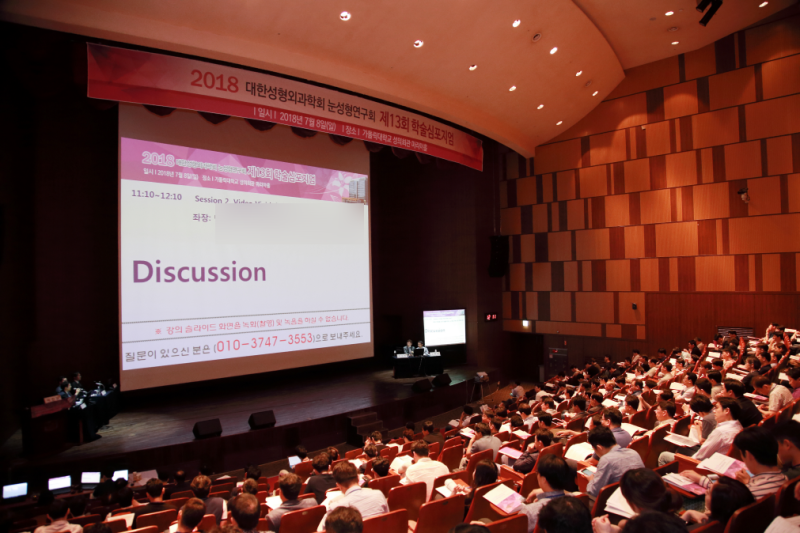
The room was packed..
About 700 plastic surgery specialists gathered to attend the lectures.
They are all board-certified plastic surgery specialists.
This shows the enthusiasm with which Korean plastic surgeons pursue self-development.
Not a single person here is a general practitioner or a non-specialist aesthetic doctor; they are all board-certified plastic surgeons.
During the discussion session. We share information and engage in Q&A.
That is the nature of academic societies.
Rather than just a one-way lecture, it is about sharing opinions. It is not like a student-teacher relationship; when I present my ideas, the feedback we exchange is what makes it different.
It is not about boasting who is better or more skilled, but about contemplating and researching together.
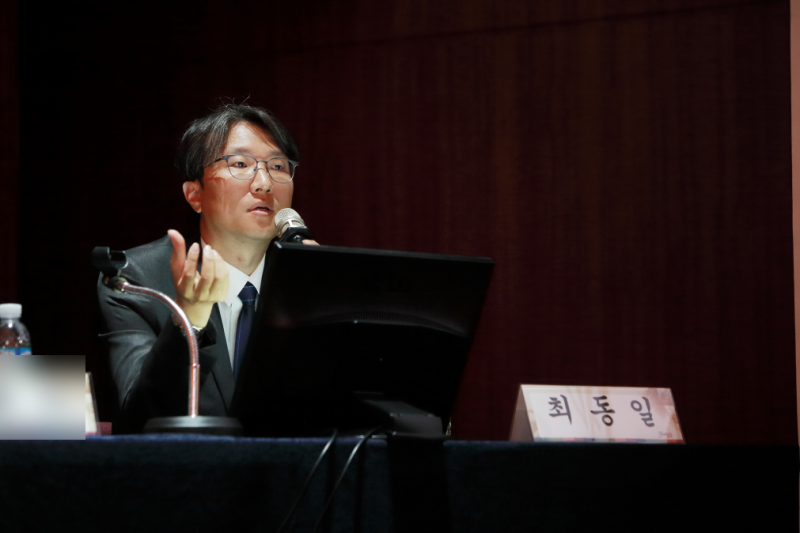
The photographer took a good shot.
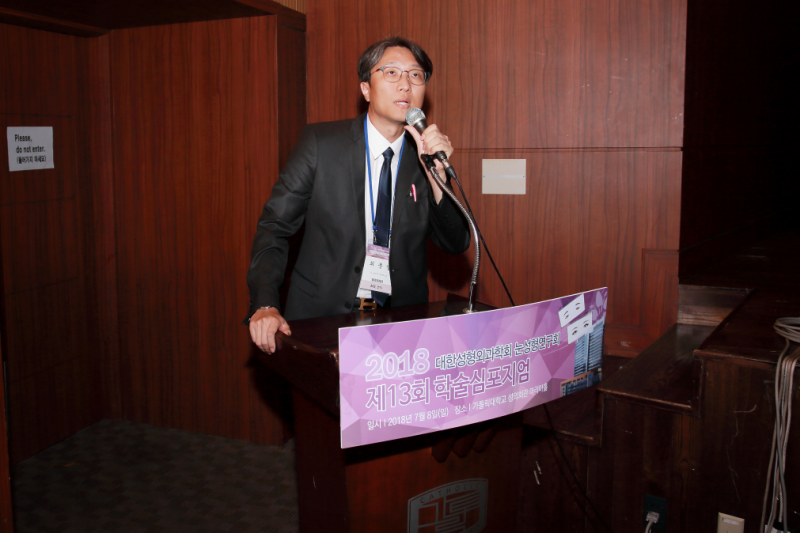
As the general secretary, I also made some announcements. -_-; The microphone looks like something from a karaoke bar.. should I sing a song?
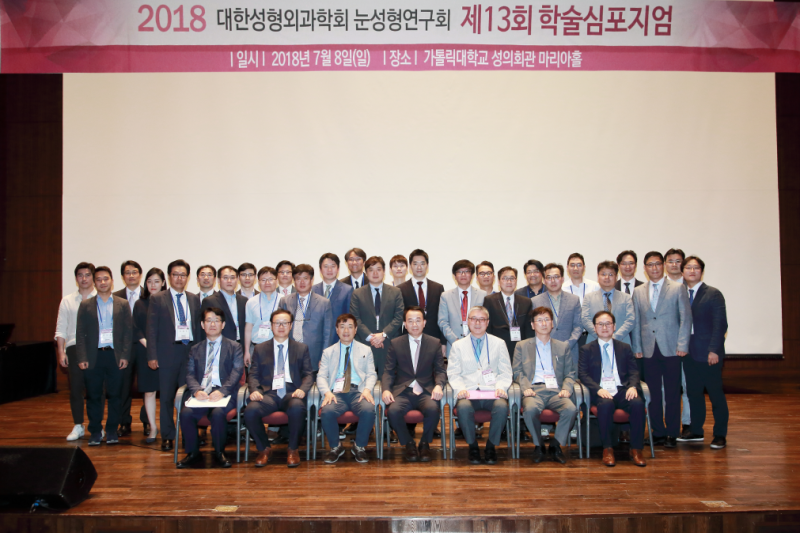
The ‘Avengers’ members leading the Ophthalmic Plastic Surgery Committee.
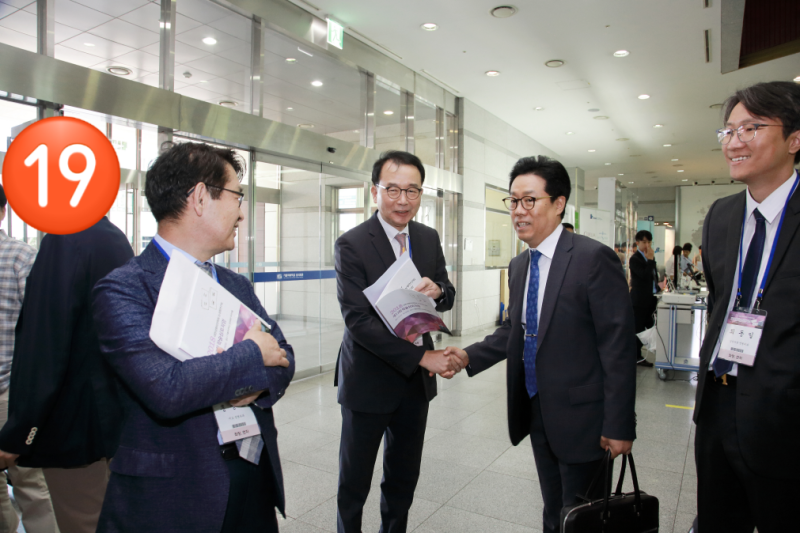
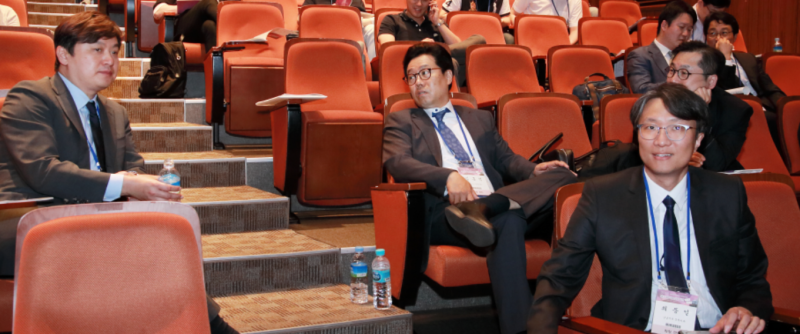
People I truly like haha
Frequently Asked Questions
What are the main side effects that can occur during incisional ptosis correction surgery?
Yes, asymmetry and damage to the eye-opening muscles are typical. If the surgeon lacks extensive experience, damaging the muscle during dissection can lead to irreversible results, such as the failure to form a double eyelid or problems with opening the eye.
Why do 'sausage' double eyelids occur after ptosis correction surgery?
This happens because safe dissection is not performed during surgery, leading to a feeling of something catching when opening the eye. In cases of patients who visited after a month following surgery at other clinics, they could not open their eyes properly due to this issue, resulting in a 'sausage' double eyelid appearance.
What is the most important factor for safely undergoing incisional ptosis correction?
Safe dissection during the surgical process is the most important factor. Precise and careful access, ensuring no damage to the eye-opening muscles, is crucial to prevent severe side effects like adhesion or asymmetry and achieve natural results.
Which doctors attend the Eye Plastic Surgery Research Society symposium?
Only board-certified plastic surgeons attend, not general practitioners or cosmetic doctors. Approximately 700 plastic surgeons gather to share their surgical experiences and information on safe approaches, continuously researching through Q&A sessions.