2026-05-29
Ptosis Correction Side Effects and Complications (feat. Long-term Progress, CFS Surgery, Early Revision)
A case study on long-term progress after correcting ptosis surgery complications, including conjunctival exposure and muscle damage, using the Conjoint Fascial Sheath (CFS) technique.
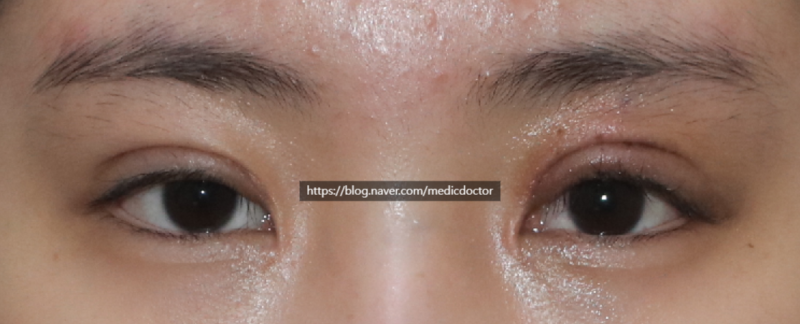
Ptosis Correction Side Effects and Complications (feat. Long-term Progress, Conjoint Fascial Sheath Surgery)
https://blog.naver.com/medicdoctor/221881089627
This is the long-term progress of a patient I posted about previously.
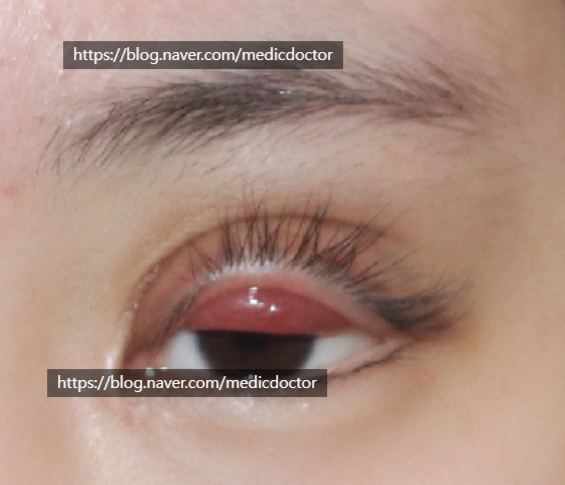
At the time of the initial visit, the patient presented with significant conjunctival exposure as shown.
One side exhibited multiple folds, difficulty opening the eye, and exposed conjunctiva.
When the area was opened during early revision surgery, it was discovered that the levator muscle (the muscle responsible for opening the eye) had been damaged. After carefully tidying up that area, the Conjoint Fascial Sheath (CFS) was utilized to correct the eye-opening function.
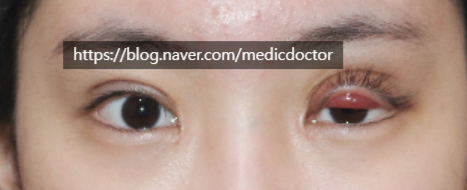
Before Surgery
1 Week Post-op
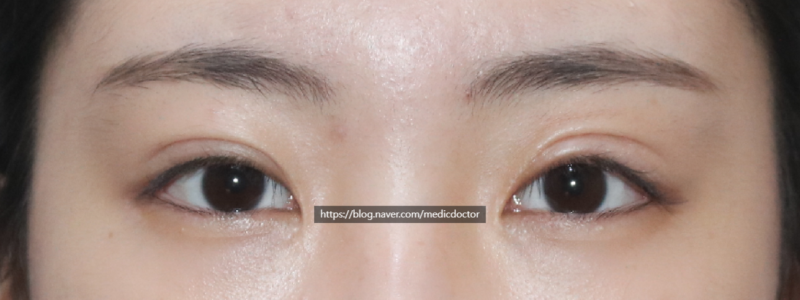
1 Year Post-op
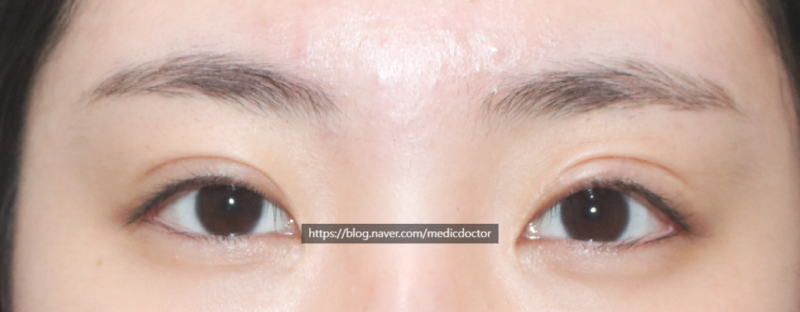
Approximately 2 Years Post-op
The surgery was completed successfully. While not achieving perfect symmetry, I believe the results are over 90% similar. This can be considered a very successful outcome.
The Conjoint Fascial Sheath (CFS) refers to an elastic tissue located deeper than the levator muscle. Utilizing this tissue is a surgical technique that requires a high level of difficulty and expertise. It is a procedure that should be performed by an experienced board-certified plastic surgeon.
Frequently Asked Questions
What are the side effects of ptosis correction surgery?
Symptoms such as excessive exposure of the conjunctiva, double folds on one side, or difficulty opening the eyes may occur. In the case presented in the main text, early corrective reoperation was performed due to these side effects to treat the damaged levator muscle.
Is early correction possible if side effects occur after ptosis correction surgery?
Yes, it is possible. If the eyes do not open well and the muscles are damaged due to side effects, early correction can be performed to reopen the surgical site and reorganize and correct the damaged levator muscle.
What is conjoint fascial sheath surgery?
The conjoint fascial sheath is an elastic tissue located deep beneath the levator muscle, and this surgery corrects the eyes to open well using it. It is a highly difficult surgical technique.
What are the results of ptosis correction reoperation using the conjoint fascial sheath?
You can expect successful results where the eyes become more than 90% similar, even if not perfectly symmetrical. According to the long-term follow-up case in the main text, it can be confirmed that the eyes are naturally corrected and well maintained even two years after the surgery.
Can conjoint fascial sheath surgery be performed at any hospital?
No, it must be performed by a skilled plastic surgeon. The technique utilizing the conjoint fascial sheath requires a high level of difficulty because it deals with deep tissues of the eye, so it must be performed by an experienced specialist for safety.