2026-05-29
Ptosis Revision Surgery: Addressing Side Effects and Failed Eyelid Correction Cases
A clinical review of a ptosis revision case involving conjunctival protrusion and mucosal eversion after a failed initial eyelid correction surgery.
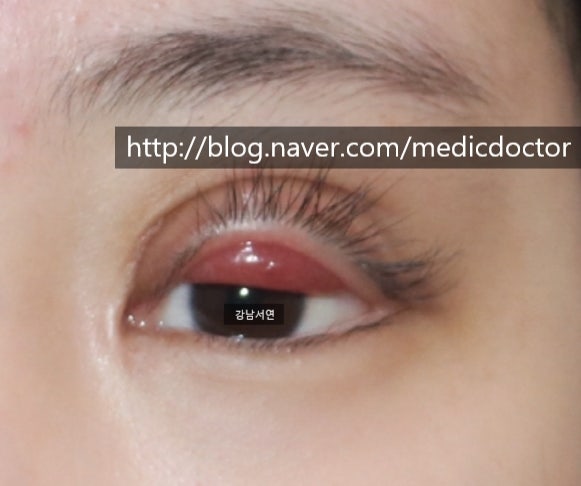
I am writing this post because I find many stories of ptosis revision surgery, eyelid correction side effects, and failed eyelid correction reviews quite unfortunate.
I would like to share a recent patient case.
Before visiting our clinic, the patient had undergone eyelid correction combined with incisional double eyelid surgery elsewhere. Due to a poor outcome on one side, the patient visited us accompanied by their original surgeon.
This is how one eye appeared upon arrival. The conjunctiva was protruding, there was mucosal eversion, and the eyelashes were excessively flipped upward.
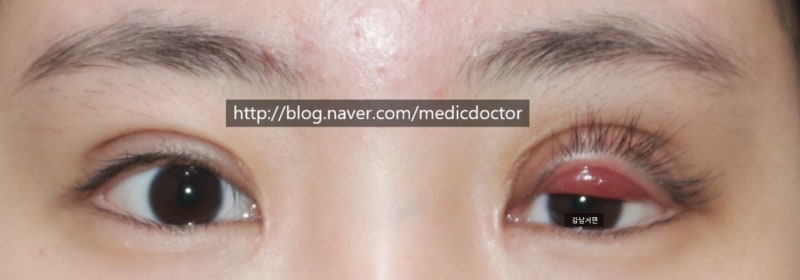
This is the state of both eyes. It was clear that the patient’s left eye (viewer’s right) required urgent correction.
In these situations, asymmetry often occurs because different surgeons are performing the procedures. However, since it had only been about a month since the initial surgery, it felt burdensome to operate on the patient’s right eye, which looked relatively acceptable.
Generally, revision surgery is best performed within 2 weeks of the initial operation. For minor adjustments, waiting until after 6 months is usually ideal.
However, a revision within the one-month mark is performed when the benefits of immediate intervention outweigh the risks of waiting.
In this patient’s case, leaving the eye in this state for 6 months would have been difficult for the patient and an awkward situation for the original surgeon.
The corrective surgery typically takes less than an hour.
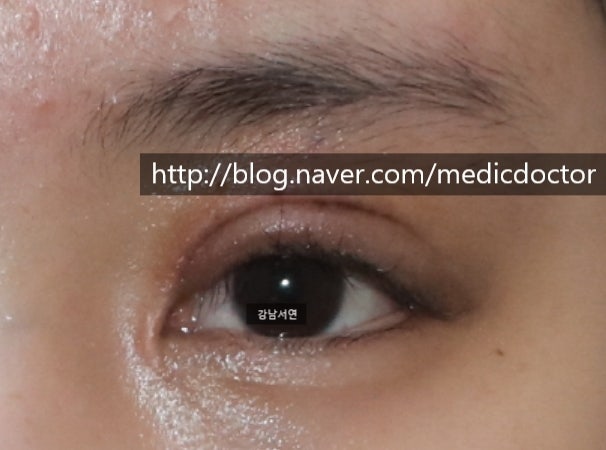
This is the appearance one week after the revision. The conjunctiva has receded, and the eye shape has significantly improved. Of course, we must continue to monitor progress at the one-month and six-month marks.
Comparing the before and after photos, the improvement is evident.
Now, all that remains is to monitor the healing process.
While the original surgeon certainly did their best, I believe the greatest act of courage is personally accompanying the patient to seek a referral from a more experienced specialist.
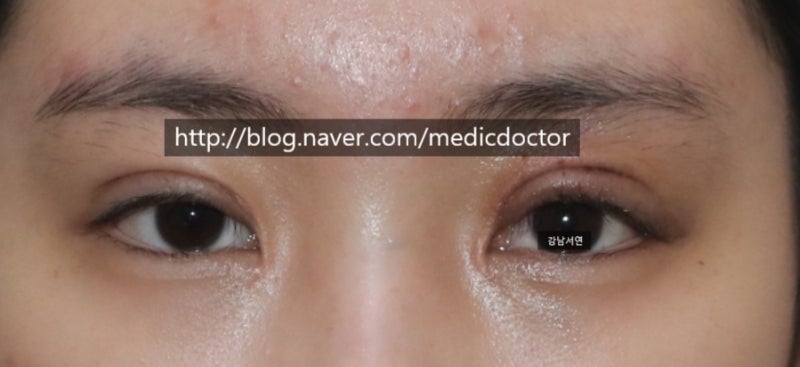
Because each eye was operated on by a different surgeon, the shapes differ slightly. We will observe the progress for over 6 months; if the slight asymmetry is acceptable, we will leave it as is. If the asymmetry remains significant, further re-correction may be necessary.
However, even looking at the current state, the shape has improved tremendously.