2026-05-29
Uneven Eye Surgery: A Case Study on Correcting Asymmetry (feat. Facial Asymmetry)
A clinical case study on correcting severe eye asymmetry and 'sausage' lids through ptosis correction and line lowering, achieving balanced results over 6 months.
Let’s take a look at a case of uneven eye surgery and correction for a patient who returned for a follow-up after 6 months.
Uneven Eye Surgery, Uneven Eye Correction Real Case Study (feat. Facial Asymmetry)
Generally, when we talk about ‘uneven eyes,’ it can be due to differences in skeletal structure or differences in the strength of the muscles that open the eyes.
This content includes excerpts from a presentation given at the Korean Society of Plastic and Reconstructive Surgeons in November 2021.
First, let’s look at cases where the skeletal structure is different.
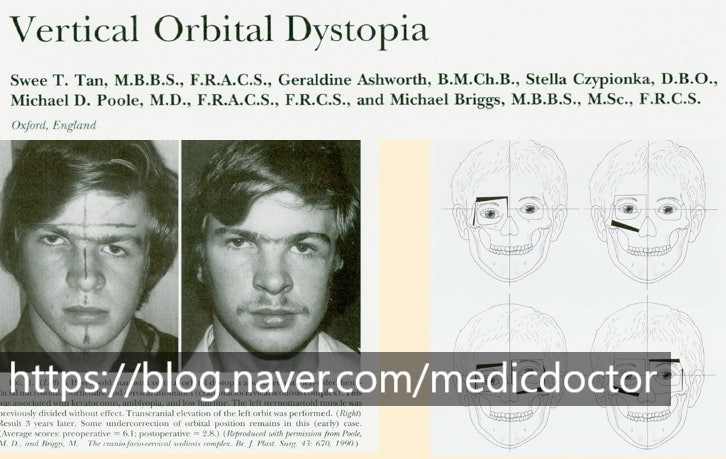
In this patient, you can see that the skeletal structure itself is skewed. The left side of the photo (the patient’s right eye) is relatively higher, while the other eye is positioned lower.
In such cases, it is impossible to match the shape using only double eyelid surgery; the correction must be addressed through the skeletal framework.
However, that type of surgery is extremely risky and, if performed incorrectly, can even be life-threatening.
The patient who came in for a follow-up today has some facial asymmetry, but the primary issue was severe asymmetry in eye size and a ‘sausage-like’ appearance of the lids.
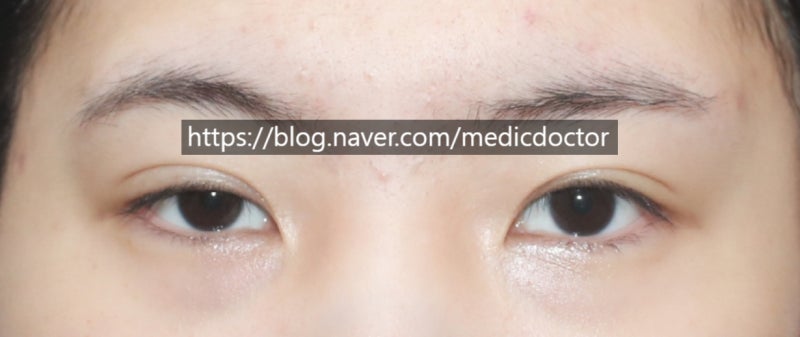
This is the pre-operative appearance. In the photo, the left side (the patient’s right eye) looks relatively sleepier and the line is higher.
This is the area in question.
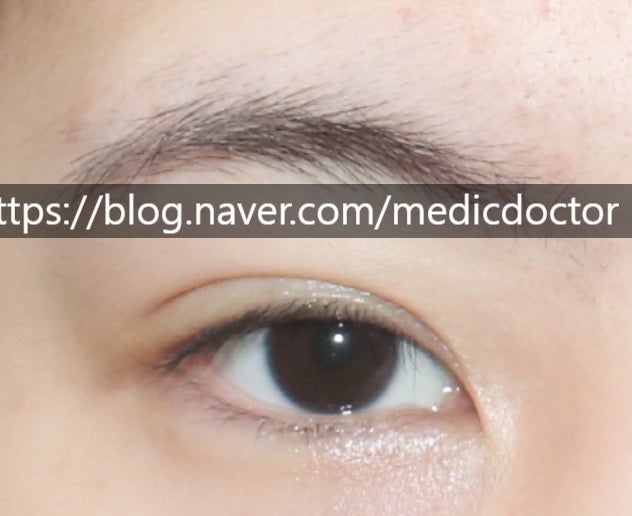
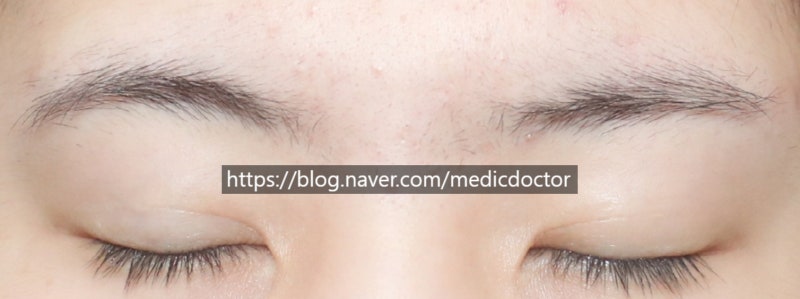
Fortunately, since the previous surgery was done using the buried (non-incisional) method, the scarring was not severe.
The patient wanted to lower both double eyelid lines and achieve symmetry in the size of the pupils (eye opening).
The patient had already undergone non-incisional ptosis correction previously, but this level of asymmetry is very, very difficult to correct with a non-incisional method.
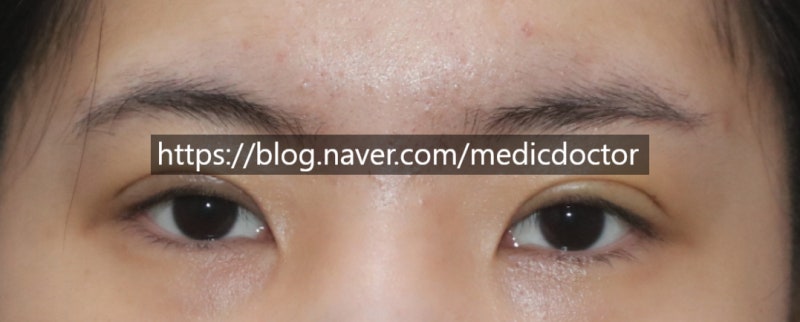
This is one week after surgery. The lines are still swollen, but the symmetry of the pupils is now balanced.
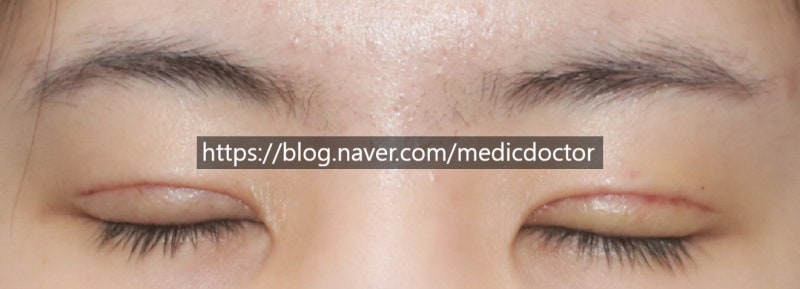
This is the appearance when the eyes are closed. The lines appear reddish.
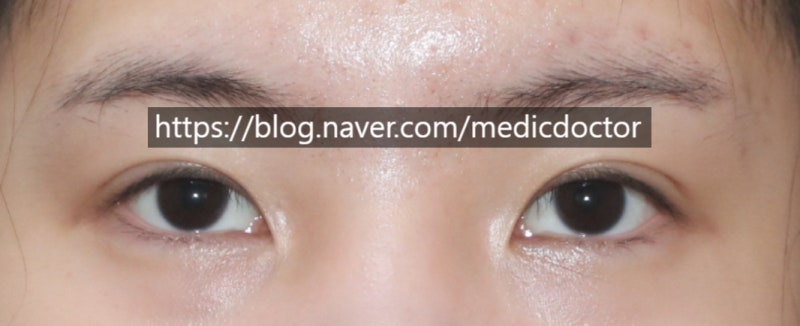
This is the appearance two months after surgery. Much of the swelling has subsided, and the symmetry remains well-maintained.
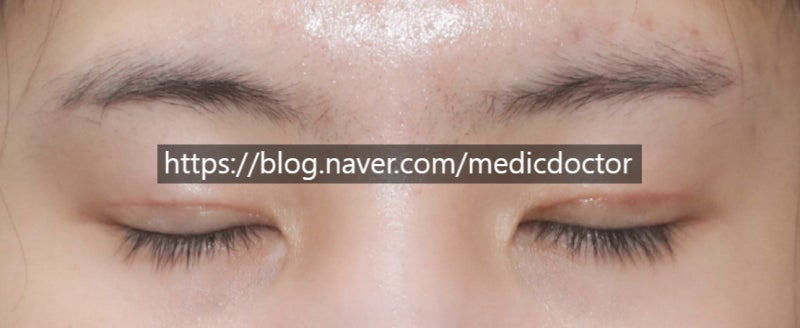
Since it has only been two months, the scar color is still red and not yet uniform.
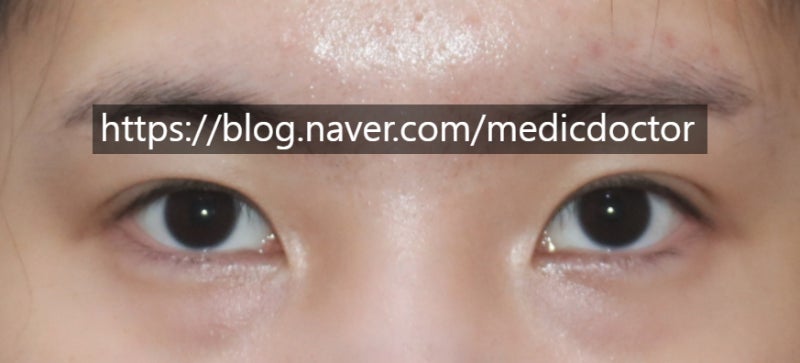
This is the 6-month follow-up. The pupils are well-symmetrized, and the lines have been lowered exactly as the patient desired.
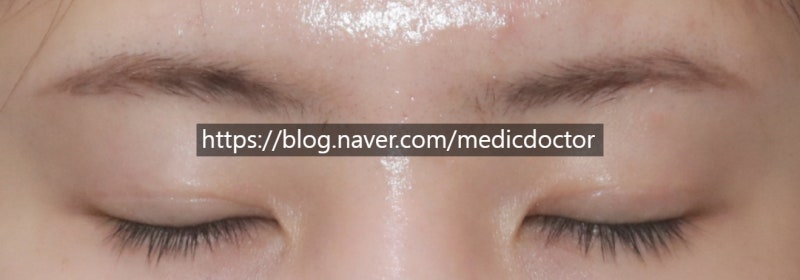
At 6 months post-op, the scars have faded, and the eyes are well-balanced.
For this patient, we performed additional ptosis correction on one side.
There were many threads left over from the previous non-incisional surgery, so a significant amount was removed.
The surgery appears to have been very successful.