2026-05-29
Lowering the Double Eyelid Line: A Case Study and 4-Month Review
A detailed look at lowering double eyelid lines using the ‘two-line’ method, focusing on scar management, skin deficiency, and long-term recovery outcomes.
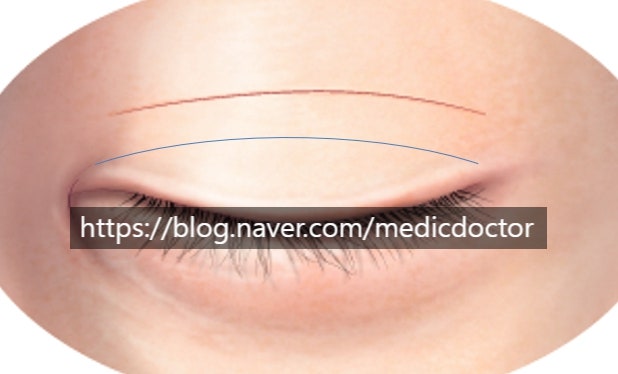
I would like to summarize the issues related to scarring when lowering the double eyelid line.
I am writing this in the hope of clearing up any unnecessary misunderstandings, as this is something I recently discussed with a patient during their follow-up visit.
There are several ways to lower a double eyelid line—roughly five to six different methods.
The choice depends on the patient’s specific condition.
Among these, there are two main issues related to scarring:
Whether to lower the line by cutting out the scarred skin,
Or to lower the line without removing the existing scar.
Assuming the upper incision line is the existing scar, if a new line is set at the lower scar position, you stand at a crossroads.
Should you cut the skin between them to create a single scar line, or leave it as two lines?
Creating a single line results in only one scar, but it is not advisable if there is insufficient skin to lower the line.
If there is plenty of skin, this is the ‘best’ method. However:
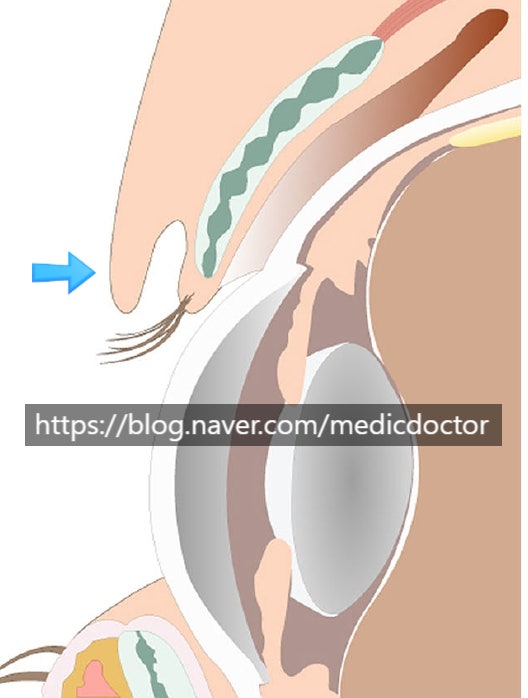
1. If skin is lacking, mucosal exposure (ectropion) may occur because the skin is pulled upward for fixation.
2. In severe cases, lagophthalmos (inability to close the eye fully) can occur. While this may improve as the scar stretches over time, the wound may widen as it fills with scar tissue, causing the eyelid scar to become depressed or the line to look wrinkled.
3. The line barely lowers. This is because the skin above the incision line needs to drape over it to lower the appearance, but it fails to do so.
Let’s look at the pros and cons of the ‘two-line’ method (skin-sparing method).
The advantages of the two-line method are:
1. It preserves even scar tissue so it can be used to cover the eyelid. To lower the line, the skin above the new incision must drape over it.
2. If skin is very scarce, it reduces tension between the incision lines, helping to prevent the scar from widening.
The disadvantage is the scar itself.
1. The scar remains visible. Although adhesions around the old scar are thoroughly released, the scar itself remains.
The most important factor here is that the final result of the two-line method depends on the condition of the original scar. The more severe the scar was before the revision, the more likely it is to remain visible and hard after surgery.
2. If adhesions are not properly released, triple folds may occur.
One patient mentioned that a ‘step’ or ‘ledge’ appeared after surgery.
Please note that the following case photos have only been cropped from the originals and have not been retouched or photoshopped in any way.
Consent was obtained for the release of all case photos.
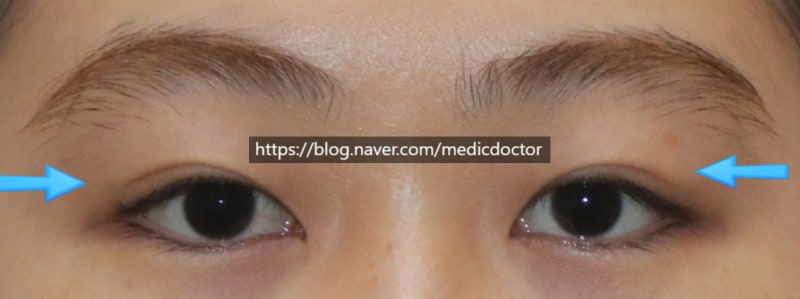
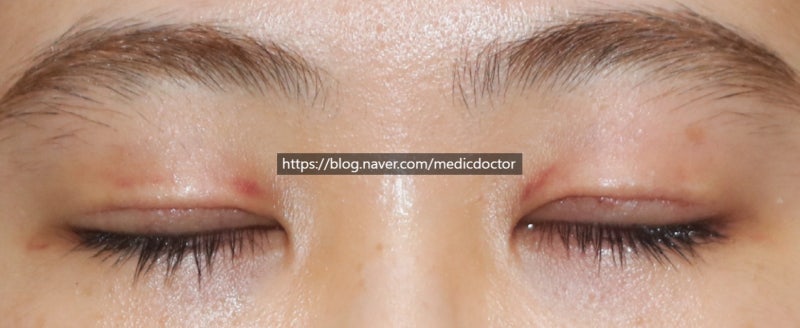
Looking at the pre-operative photo, there is a significant lack of skin at both ends, preventing the fold from forming completely and making the skin look thick.
The patient wanted the line lowered as much as possible. While a complete ‘inner fold’ seemed difficult, I told them I would do my best.
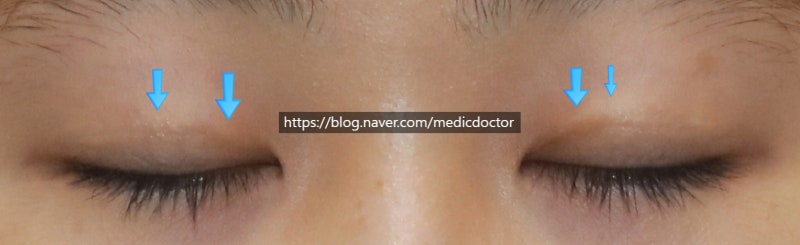
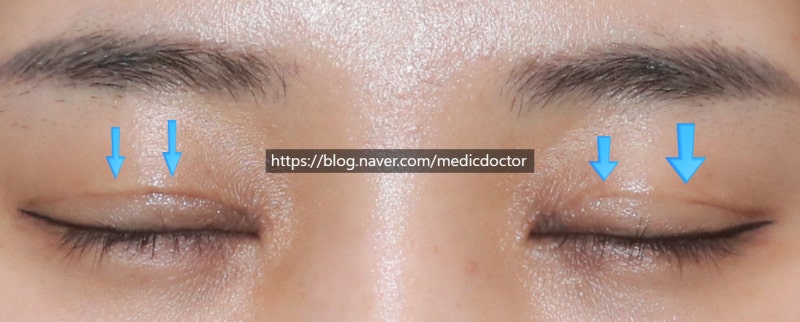
When the eyes are closed before surgery, you can see the scar is protruding and bumpy above the incision line due to repeated surgeries.
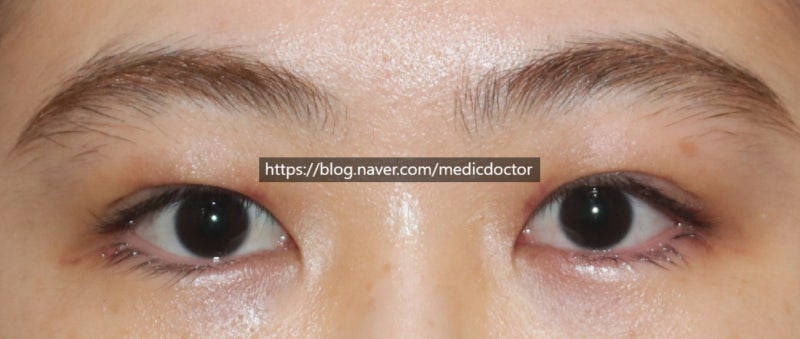
Appearance 1 week after surgery.
The existing scar is visible as a white line above the new double eyelid fold.
Regarding the ‘step’ mentioned by the patient: as explained in previous posts, the muscle in the upper part is temporarily rolled and sutured to prevent triple folds. This flattens out over time.
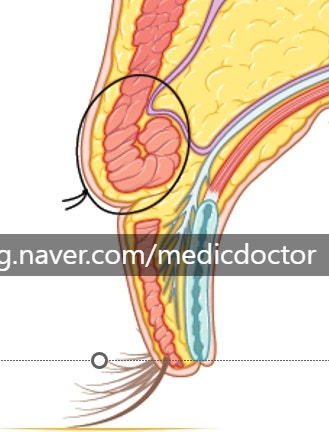
However, while the rolled muscle eventually flattens, the upper scar does not disappear—especially if there was pre-existing scar tissue.
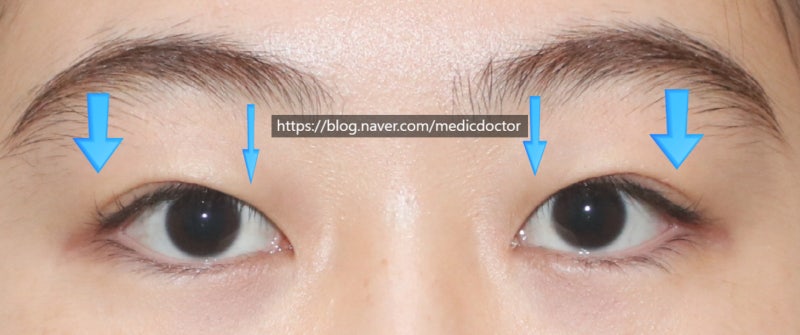
Appearance 4 months after surgery. The line at the front has lowered significantly more than expected, and the back has lowered slightly, with the previously broken line now extending to the end.
In the case of the thin arrow, the front skin drapes over, making the line look lower. For the thick arrow at the back, because skin was very scarce, the previously loose line is now more defined but remains more visible than the front.
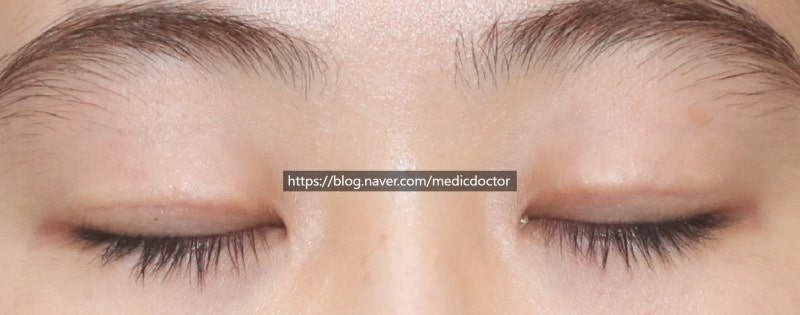
This is the scar photo at 4 months. The ‘step’ has disappeared over time, but the bulging part of the original scar remains.
There was an unexpected variable in the scar near the inner corner. As the scar settled, more skin slack was created than anticipated, causing it to cover the line more than the outer side.
On the outer side, where skin was very scarce, the scar looks flatter, but the line is more visible. Conversely, the thick scar tissue near the nose caused the line to be covered.
The scar tissue corresponding to the arrowed area remained and covered the line.
You might wonder how to solve this.
1. If the outer line drapes more as swelling subsides over time, it may look natural as a general inner fold. Given the patient’s thick skin, I expected the line to be slightly visible rather than completely hidden, but seeing how the front is covered, it might not lower as much as expected.
2. The most likely solution is to slightly trim the skin at the front or raise the line again. However, raising the front while leaving the back as is would be unbalanced. This is because the previous incision line was also higher at the outer edge than the front; it just wasn’t noticeable because it had come undone.
Therefore, slightly trimming the protruding part to make the front look like a slightly lower fold would likely be the best way to make the overall fold appear low. In that case, the appearance at one week post-op would likely be the final result.
If any follow-up adjustments are needed, I will do my best to correct them.
Since cosmetic surgery is performed by humans, especially in revision cases, I provide secondary corrections if there are any shortcomings.
I always inform patients undergoing the two-line method that scars will remain. Photos of other patients show the same.
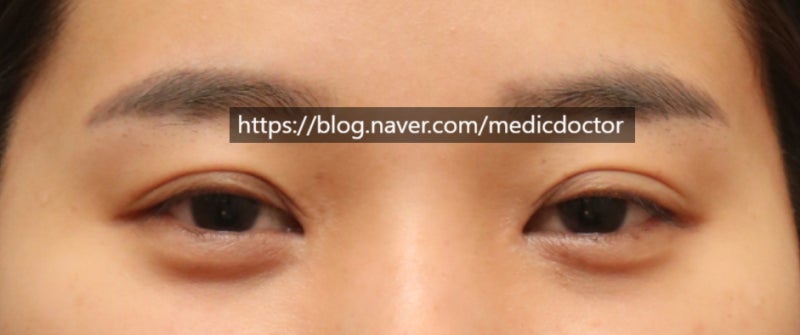
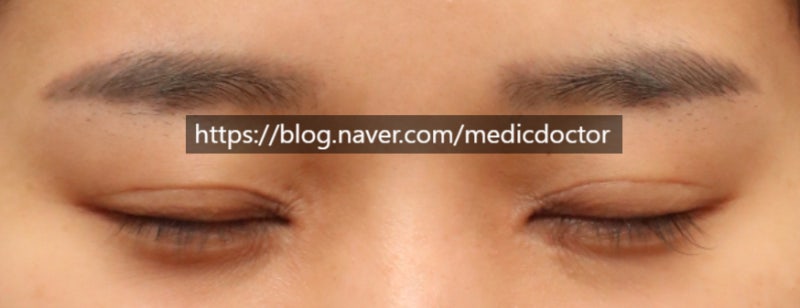
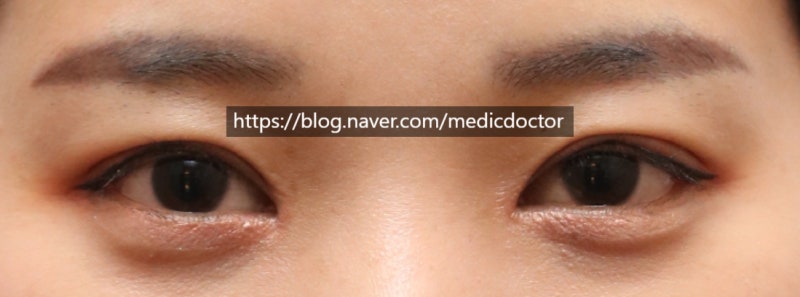
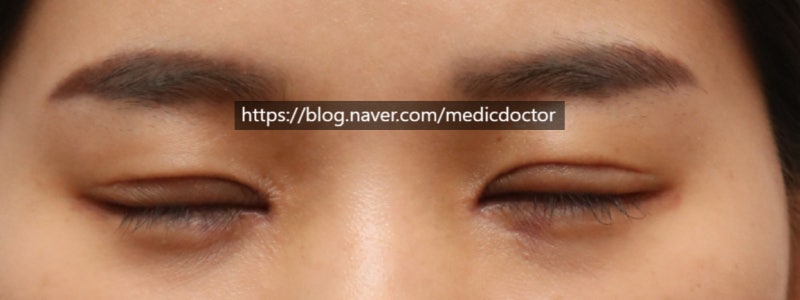
At one week post-op, the ‘step’ patients mention is visible. This is a temporary protrusion, but the white scar and scar tissue will not disappear.
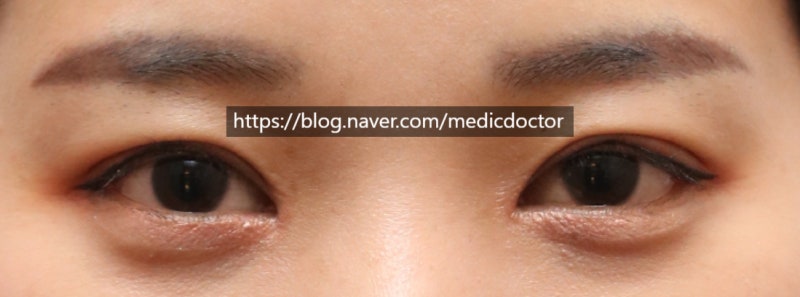
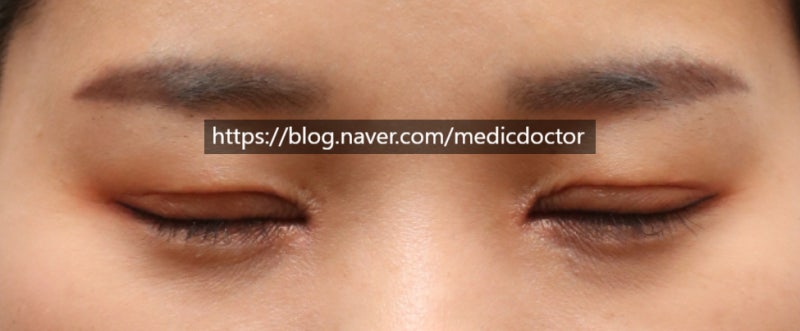
1 month post-op – It still remains at one month and usually starts to improve gradually after three months.
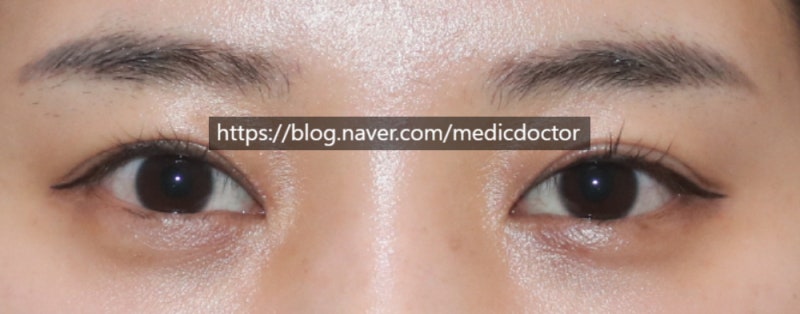
These are photos 3 years after surgery. Looking at the white scar (arrow) above the incision line at 3 years, it is still there, but the ‘step’ has vanished, leaving only a slight protrusion of scar tissue.
Will the scar disappear if I have revision surgery?
While the goal is to improve upon a failed first surgery, any incision will inevitably leave a scar. Existing scars do not disappear unless they are cut out.
Furthermore, for depressed scars, we try to improve them as much as possible by bringing in surrounding tissue, but we cannot eliminate the scar entirely.
Kangnam Seoyeon Plastic Surgery will always do its best.
------------------------------------------------------------------------------------------------------------------------------